

What is CareTEX Tokyo [Summer]? | B2B Trade Show for Care Products, Care Technology and Care Food

CareTEX Tokyo [Summer] is a B2B trade show that brings together products and services required by nursing care facilities and frontline care operations, including care products, equipment and services for care facilities, care technology and care food. It is held for professional visitors in the nursing care industry, including owners and managers of nursing care and senior care facilities, facility directors, operations, procurement and purchasing personnel, care managers, nurses, PTs, OTs, STs, care workers, and welfare equipment retailers and wholesalers.
At the venue, visitors can not only view products but also try care products and equipment, taste care food, compare products and services from multiple companies, and hold direct business discussions with exhibitors. A key feature is the ability to compare solutions addressing a wide range of challenges faced by care providers, including labor shortages, productivity improvement, care DX, monitoring, operational efficiency, meals and nutrition, and facility management.
What is CareTEX Tokyo [Summer]?
A B2B trade show for professionals in the nursing care industry
CareTEX Tokyo [Summer] is a specialized exhibition for the nursing care industry organized by Boutiques, Inc. CareTEX is held in various locations across Japan, and the Tokyo edition is also held during the summer, providing business opportunities with nursing care and senior care facilities, home-care service providers, hospitals and rehabilitation facilities, and distribution-related companies mainly in the Tokyo metropolitan area.
An important point is that this is not a welfare event for general consumers, but a trade show designed for business discussions among industry professionals. General consumers, students and persons under the age of 18 are not permitted to enter, and the event is intended for professional visitors involved in product selection, equipment introduction, procurement and facility operations.
The summer edition began in 2024
The first CareTEX Tokyo [Summer] was held in 2024. Following the second edition in 2025, the third edition was held in 2026, and the event is becoming established as CareTEX’s summer business exhibition in Tokyo.
At the time of the inaugural event, the organizer expected 200 exhibitors and 6,000 visitors. The event has continued since then, and the 2026 edition was held with approximately 150 exhibitors. Because the venue and exhibition scale may vary by year, it is important to distinguish the figures for each edition.
Event Overview
CareTEX Tokyo [Summer] Event Information
| Exhibition Name | CareTEX Tokyo [Summer] |
|---|---|
| Dates | August 19 (Wed) – 21 (Fri), 2026 |
| Opening Hours | 9:30–17:00 |
| Venue | Tokyo Big Sight, West Hall 4 |
| Organizer | Boutiques, Inc. |
| Format | B2B trade show for the nursing care industry |
| Admission | Advance visitor registration required |
| Exhibition Scale | Approximately 150 exhibitors |
Advance registration is required for admission. Visitors who register at the staffed reception desk on the day without completing advance registration are informed that an admission fee of JPY 5,000 will be charged, so advance registration is the standard approach for those planning to attend.
Exhibition Scale and Number of Exhibitors
Approximately 150 leading companies from the nursing care sector exhibited in 2026
For the 2026 edition, the organizer announced that the event had expanded compared with the previous edition, bringing together approximately 150 leading companies from the nursing care sector at Tokyo Big Sight. Exhibitors covered not only care products but also facility equipment, management support, staffing services, care robots, ICT and systems, monitoring solutions and care food.
Meanwhile, the final number of visitors for the 2026 edition has not been clearly published in the official information that can be confirmed. Therefore, rather than using an estimated figure, this guide focuses on the officially confirmed exhibition scale.
Five Component Exhibitions
Care Products Exhibition
This specialized area features care products and welfare equipment that support daily care operations and users’ everyday lives. Visitors can directly examine products used in actual care settings and compare their operability and ease of use.
Care Facility Industry Exhibition
This area focuses on equipment and fixtures for senior care facilities, as well as products and services related to facility development, renovation and operational improvement. It is useful not only for facility operators but also for companies involved in facility development, design and construction.
Care Facility Solutions Exhibition
This specialized exhibition focuses on services that address management and operational challenges at nursing care facilities. Areas include revenue improvement and management support, staff recruitment, training and retention, foreign human resources, disaster prevention and BCP, energy saving and cost reduction, and private-pay services.
Care Technology Exhibition
This area brings together care robots, care systems, monitoring technologies and other solutions that support productivity improvement and operational efficiency at care facilities. As staff shortages and the need to reduce employee workload become increasingly important issues, this is one of the most closely watched categories at CareTEX Tokyo [Summer].
Care Food Exhibition
This specialized exhibition focuses on food for nursing care facilities and senior citizens. Exhibits include meal delivery and food service, nursing care food and therapeutic diets, meal-related recreation and kitchen equipment, enabling facility food-service staff and nutrition-related personnel to compare solutions.
Main Exhibit Categories
Covering everything from facility management to frontline care operations
- Care products and welfare equipment
- Rehabilitation products and equipment
- Strength-training equipment
- Relaxation and wellness equipment
- Equipment and fixtures for care facilities
- Care robots
- Monitoring systems and sensors
- Care systems and ICT
- Operational efficiency and DX solutions
- Management support and revenue improvement services
- Staff recruitment, training and retention support
- Foreign human resource services
- Disaster prevention and BCP measures
- Energy saving and cost reduction
- Private-pay services
- Recreation and brain-training programs
- Digital and VR recreation
- Meal delivery and food service
- Care food and therapeutic diets
- Kitchen equipment and meal-related services
Visitor Profile
Professional visitors involved in management, operations and purchasing at care facilities
CareTEX Tokyo [Summer] targets a wide range of professionals directly involved in the operation of nursing care and senior care services, from facility owners and senior management to frontline staff. In particular, business discussions are expected with company presidents and executives, facility directors, and those responsible for facility development, operations, procurement and purchasing who are involved in decisions on the adoption of products and services.
- Fee-based senior homes
- Special nursing homes for the elderly
- Geriatric health service facilities
- Group homes
- Senior housing with supportive services
- Day-service facilities
- Short-stay facilities
- Home-visit care, bathing and nursing services
- Home-care support offices
- Care taxi operators
- Hospitals and clinics
- Rehabilitation facilities
- Facilities for persons with disabilities
- Welfare equipment retailers and rental providers
- Welfare equipment wholesalers and rental wholesalers
- Trading companies, wholesalers and mail-order companies
- Meal delivery and food-service operators
- Design and construction companies
Healthcare professionals and frontline staff are also important visitor groups
In addition to management-level visitors, care managers, nurses, PTs (physical therapists), OTs (occupational therapists), STs (speech-language-hearing therapists) and care workers are also among the intended visitors. Because frontline staff who actually use products can examine equipment and services, exhibitors can also receive direct feedback on usability and suitability for actual care environments.
Nursing Care Market Trends and Key Themes
Care DX and productivity improvement amid labor shortages
Securing personnel and reducing staff workload are major management challenges in the nursing care industry. As a result, interest is increasing in care technologies that improve operational efficiency through monitoring systems, care-record systems, sensors and robots.
At CareTEX Tokyo [Summer], an important benefit is the ability to examine products that directly contribute to productivity improvement and compare functions and implementation methods from multiple companies.
Use of AI and technology
AI and technology utilization was also covered in specialized seminars in 2026, showing that the adoption of digital technologies has become an important management theme for care providers. Rather than simply introducing systems, facilities increasingly require practical comparisons regarding how much staff workload can be reduced and how new systems can integrate with existing operations.
Recruitment, training and retention of care staff
To address labor shortages at care facilities, recruitment support, staff education, retention support and foreign human resource services have also become important exhibit categories. One of the characteristics of CareTEX is the ability to compare not only equipment and systems but also services that improve facility operations from the human resources perspective.
Improving the efficiency of meal and nutrition services
Senior care facilities need to provide meals appropriate to each user’s condition while also improving kitchen efficiency. The Care Food Exhibition covers not only care food and therapeutic diets but also meal delivery, food-service services and kitchen equipment, providing an opportunity to review the entire meal-service operation.
BCP, energy saving and facility management
Disaster prevention, BCP measures, energy saving and cost reduction are also important management themes for nursing care facilities. Because CareTEX Tokyo [Summer] covers not only products used in frontline care but also services that improve facility management itself, it enables executives and facility directors to compare solutions for a wide range of issues at one event.
Characteristics of CareTEX Tokyo [Summer]
Experience, compare and negotiate directly at the venue
CareTEX Tokyo [Summer] is characterized by the ability to examine products directly at the venue, experience or taste them where appropriate, compare multiple products and services, and then hold direct business discussions with exhibitors rather than selecting products only through catalogs or online information.
Many products in the nursing care sector require actual confirmation before adoption: operability for care and rehabilitation equipment, real-world operation of monitoring equipment and systems, and taste and texture for care food. This makes the sector particularly well suited to physical trade shows.
Business meeting reservation and matching services
In addition to reservations for meetings at exhibitor booths, the organizer provides a matching support service called the “Connect Service.” The service identifies the products visitors want to compare and the challenges they face, and arranges meetings when those needs match an exhibitor’s services.
For exhibitors, this means opportunities are not limited to waiting for visitors who happen to pass the booth; they can also connect with care providers that have specific operational challenges or implementation needs.
Comparison with Previous Editions
Tokyo summer edition continues
| Edition | Dates | Venue |
|---|---|---|
| 1st | July 30 – August 1, 2024 | Tokyo Big Sight, East Exhibition Hall |
| 2nd | August 6–8, 2025 | Tokyo Big Sight, West Hall 4 |
| 3rd | August 19–21, 2026 | Tokyo Big Sight, West Hall 4 |
The summer edition launched in 2024 has now been held for three consecutive years, and since 2025 it has taken place in West Hall 4 of Tokyo Big Sight. For 2026, the organizer announced an expansion compared with the previous edition, with approximately 150 exhibitors participating.
FAQ
What kind of exhibition is CareTEX Tokyo [Summer]?
It is a B2B trade show for the nursing care industry, bringing together care products, equipment and services for care facilities, care robots, systems, monitoring solutions, care food and related products.
Can members of the general public attend?
No. Because the event is intended for business discussions among industry professionals, general consumers, students and persons under the age of 18 are not permitted to enter.
What types of visitors attend?
Main visitor groups include presidents, executives and facility directors of nursing care and senior care facilities, personnel responsible for facility development, operations, procurement and purchasing, care managers, nurses, PTs, OTs, STs, care workers, welfare equipment retailers and wholesalers, and professionals from hospitals and rehabilitation facilities.
Is care technology exhibited?
Yes. The Care Technology Exhibition is held as one of the component exhibitions and features care robots, systems, monitoring solutions and other products and services that improve operational efficiency and productivity in care settings.
Do companies related to care food also exhibit?
Yes. The Care Food Exhibition features meal delivery and food-service services, care food, therapeutic diets, meal recreation, kitchen equipment and other products and services related to meal provision at care facilities.
Is advance registration required?
Yes. CareTEX Tokyo [Summer] requires advance visitor registration. Visitors enter using a visitor badge issued after completing the registration process.
Watch Exhibitor Videos
The videos shown below are randomly selected from this exhibition. To browse all videos from this exhibition, please see the “Featured Exhibitions by Year” section below.
Care-wing - Logic Inc. [The 3rd CareTEX Tokyo '26 Summer]
Voxela - Voxela Inc. [The 3rd CareTEX Tokyo '26 Summer]
Fukuyakkun - CUC i-DATA Inc. [The 3rd CareTEX Tokyo '26 Summer]
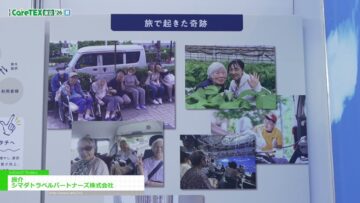
Tabisuke - Shimada Group [The 3rd CareTEX Tokyo '26 Summer]
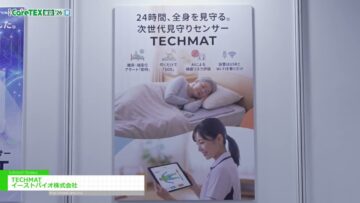
TECHMAT - East Bio, Inc. [The 3rd CareTEX Tokyo '26 Summer]
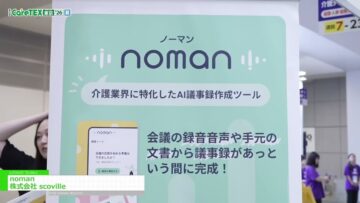
noman - scoville Co., Ltd [The 3rd CareTEX Tokyo '26 Summer]
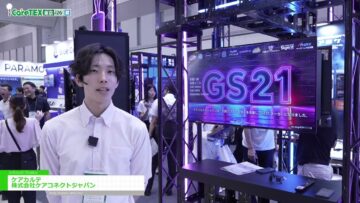
Care Records - CARE CONNECT JAPAN INC. [The 3rd CareTEX Tokyo '26 Summer]
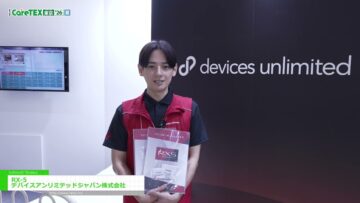
RX-5 - Devices-Unlimited Japan Co., Ltd. [The 3rd CareTEX Tokyo '26 Summer]
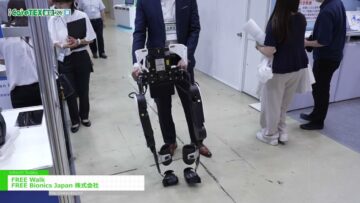
FREE Walk - FREE Bionics Japan Inc. [The 3rd CareTEX Tokyo '26 Summer]
Featured Exhibitions by Year
 9 VideosPlay All
 The 3rd CareTEX Tokyo '26 Summer (Japan)
Benefits of Exhibiting
CareTEX Tokyo [Summer] is a B2B business exhibition where products and services required by nursing care facilities and frontline care operations come together, including care products, equipment for care facilities, care technology, facility management support, care food and meal services. One of the major benefits is the opportunity to directly propose solutions to industry professionals actually involved in product selection and adoption, such as owners and managers of nursing care and senior care facilities, facility directors, operations, procurement and purchasing personnel, care managers, nurses, care workers, and welfare equipment retailers and wholesalers.
Exhibit categories are wide-ranging, including products for walking, bathing and toileting assistance, care bathing systems and lifts, rehabilitation equipment, monitoring sensors, care management systems, care robots, human resources and management support, disaster prevention and BCP, energy saving, recreation, care food and kitchen-related solutions. As a result, exhibitors can address a wide variety of facility management challenges. The event is therefore suited not only to increasing awareness of new products, but also to generating concrete business discussions regarding facility adoption, distributor development and replacement of existing services.
In the nursing care industry, specifications in a catalog are not enough. Visitors place importance on questions such as “How is this used in actual care operations?”, “How much can it reduce staff workload?” and “What benefits does it provide to residents and users?” Combining hands-on product experiences, demonstrations, tastings, implementation examples and exhibition videos can help make these benefits more concrete and lead to better results.
Key Points for Exhibition Preparation
When exhibiting at CareTEX Tokyo [Summer], it is important not only to present product or service functions, but also to connect them directly to the problems faced by care facilities. Starting with concrete challenges such as “reducing the burden of transfer assistance,” “improving nighttime monitoring efficiency,” “reducing care-recording work,” “addressing staff shortages,” or “balancing meal quality with operational efficiency” makes it easier for visitors to relate the solution to their own facility.
- Clearly define the target facilities and professional roles
- Show how operations or care methods change before and after implementation
- Present implementation examples and evaluations from actual care settings clearly
- Plan how hands-on trials, demonstrations and tastings will be operated
- Be prepared to explain pricing, implementation time and maintenance/support systems
- Prepare exhibition videos and diagrams that can communicate the key points in a short time
Care robots, monitoring systems and operational support systems in particular can be difficult to understand without seeing actual usage scenarios. Showing examples of how the product is used inside a facility through exhibition videos and combining this with live demonstrations can deepen visitor understanding.
Booth design requirements also vary depending on the exhibit category. Care products may require space suitable for wheelchair users, care equipment may require safe hands-on demonstration routes, and care food may require tasting operations. Consulting an exhibition booth contractor with experience in nursing care, medical and welfare exhibitions at an early stage makes it easier to create a booth suited to the exhibit content.
Estimated Exhibition Costs
The cost of exhibiting at CareTEX Tokyo [Summer] should include not only the booth fee but also booth construction, electricity and communications, monitors, exhibition videos, staffing, transportation and logistics, and tasting facilities where applicable. As a broad indication, even a small exhibit may require a total budget starting around JPY 1 million, while multiple booths or large equipment can increase the total to several million yen or more.
The following figures are broad estimates intended for exhibition planning. Actual booth fees, corner booth charges, options and ancillary facilities vary depending on exhibition conditions, so exact pricing should always be confirmed directly with the exhibition organizer.
| Cost Item | General Estimate | Main Components |
|---|---|---|
| Booth Fee | Several hundred thousand yen to around JPY 1 million per booth | Exhibition space; varies depending on number of booths and exhibition conditions |
| Booth Construction | JPY 500,000 to JPY 3 million or more | Walls, flooring, signage, display fixtures, meeting areas, lighting, etc. |
| Video and Monitor Equipment | JPY 100,000 to JPY 1 million or more | Monitors, LED displays, playback equipment, exhibition video production, etc. |
| Staffing | Several hundred thousand yen or more | Product explainers, reception staff, promotional staff, interpreters and operations personnel |
| Transportation and Logistics | Several tens of thousands to several hundred thousand yen or more | Delivery and removal of care products, equipment, food products and fixtures |
Booth Fee
A single booth is suitable for companies presenting a focused selection of care products, welfare equipment, compact equipment, systems or facility services. If hands-on product demonstrations and meeting space are required, two booths or more should be considered, while four booths or more provide greater layout flexibility for large equipment or multiple product categories.
Corner booths and other locations with multiple open sides can make it easier to attract visitors, but additional charges may apply. Because booth fees and location conditions may change, the latest pricing and availability should be confirmed with the organizer.
Decoration and Booth Construction Costs
Simple decoration using a standard system booth may start at around JPY 500,000, while custom-built structures, original fixtures and large signage may cost JPY 1 million to JPY 3 million or more. Experience-oriented booths that recreate care facility rooms, bathrooms or dining areas may require additional construction costs.
At CareTEX Tokyo [Summer], displays that help visitors imagine the actual usage environment are important. For example, a monitoring system can be shown around a bed, care bathing equipment in a bathing environment, facility equipment in a recreated resident room, and care food in a dining setting. Recreating the actual installation environment makes product value easier to understand.
Using monitors or LED displays to show footage from facilities where the product is already in use is also effective. When video production is included, an additional budget ranging from tens of thousands to several hundred thousand yen or more may be required depending on the content and filming method.
Staffing Costs
As a general guideline, even a single booth may require around two to four staff members to divide responsibilities such as approaching visitors, product explanations, live demonstrations and business discussions. Larger or experience-oriented booths may require additional staff for safety management and visitor guidance.
Visitors to nursing care exhibitions include not only facility managers but also care managers, nurses, rehabilitation professionals and care workers. In addition to sales staff, having personnel who can answer questions about actual usage in care settings and technical details makes it easier to generate concrete business discussions.
If overseas products are being introduced or foreign-language support is required, interpreters should also be considered. Exhibition videos with English subtitles can continue providing basic product information while interpreters or staff are engaged in other meetings.
Transportation and Logistics Costs
Small care products can generally be transported by standard parcel delivery or exhibition logistics services. However, large products such as care bathing systems, lifts, beds and rehabilitation equipment may require heavy-equipment transportation and specialized handling. Costs may range from tens of thousands to several hundred thousand yen or more depending on the size and weight of the product.
Companies located outside Tokyo should plan for round-trip transportation, empty-container storage and return shipment after the event. Care food exhibitors may also require chilled or frozen transportation and storage for tasting samples, while kitchen equipment may require confirmation of electrical power needs. For large equipment, loading entrances, delivery times and floor-load limits should be confirmed with the booth contractor in advance.
Booth Examples by Size
1-Booth Exhibit
A one-booth exhibit is suitable for first-time exhibitors or companies seeking to test market response to a new product. By focusing on a limited number of products, such as care products, compact rehabilitation equipment, monitoring sensors, care systems or facility services, meaningful business discussions can still be generated in a compact space.
Wall panels can display clear problem-focused messages such as “Reduce the burden of nighttime monitoring” or “Support transfer assistance,” while products are placed toward the front and a monitor is installed at the side. Exhibition videos can show actual usage in nursing care facilities even within a limited space.
Because display tables and staff positions can easily block the entrance in a small booth, it is important to consult a contractor experienced in space-efficient visitor flow. Reviewing actual construction examples can help determine how products, monitors and explanation space can be arranged within a limited area.
2-Booth Exhibit
With two booths, it becomes easier to separate hands-on product experiences from business meeting space. Visitors can try care robots, rehabilitation equipment and monitoring systems and then move naturally into discussions about implementation conditions and pricing.
Live demonstrations and exhibition videos on large monitors can be shown on the aisle side, while meeting tables are placed toward the rear. For care food, separating the tasting area from the meeting space makes operations easier during busy periods.
Displays that recreate a care facility also require enough space for both the person acting as the user and the caregiver. Consulting a company experienced in nursing care and medical exhibitions and reviewing past booth photographs can help determine effective layouts for hands-on and meeting areas.
4 Booths or More
With four booths or more, it becomes possible to recreate parts of a nursing care facility such as a resident room, bathroom, rehabilitation area or dining room. This format is suitable for companies that want to present multiple products and services together and demonstrate how they can be used throughout an entire facility.
Large LED displays and digital signage can show implementation examples and actual usage scenes, while hands-on product experiences, mini seminars and individual business meetings are arranged in separate areas. For care technology, sensors, systems and robots can be connected and presented as an actual operational workflow.
Large booths require integrated planning not only for booth construction but also for video, electricity, communications, demonstration operations and safety management. Reviewing construction photographs and experience in nursing care and medical exhibitions helps identify contractors capable of supporting hands-on exhibits.
Key Points for a Successful Exhibition Booth
Visitor Flow Design
At CareTEX Tokyo [Summer], many visitors move from viewing products to trying, tasting or comparing them before proceeding to business discussions. Booth design should therefore support a natural flow of “see,” “try” and “consult.” The aisle side should remain open so interested visitors can approach products without first having to speak to a staff member.
For care products and rehabilitation equipment, sufficient space should be secured for actual use. Visitors waiting for demonstrations should not cross paths with those already in business meetings, and the booth should allow visitors to move naturally from the experience area to the consultation area.
Visibility
Because care-related products cover many different applications, a company name alone may not communicate what the booth offers. Categories and problems such as “monitoring,” “transfer assistance,” “care records,” “staff shortage solutions” and “care food” should be displayed in positions that can be read from a distance.
- High-position signage visible from a distance
- Catchphrases showing the specific care-site problem being solved
- Large photographs showing actual usage scenarios
- Lighting that makes products easy to see
- Video presentation using monitors or LED displays
Technology-based services in particular may be difficult to understand simply by looking at the product itself. Showing before-and-after operational changes and actual usage scenarios on large monitors makes the solution easier to understand even from the aisle.
Demonstration and Experience Design
At CareTEX Tokyo [Summer], the ability to try products directly is a major advantage. Walking aids, lifts, rehabilitation equipment, monitoring systems and care robots can be better understood when visitors experience actual usage and evaluate operability and implementation benefits firsthand.
For care food, tastings are important for checking flavor, texture and ease of eating. For facility systems, showing actual screens for care records, workforce management and monitoring makes it easier to explain how frontline operations change after implementation.
Rather than simply demonstrating the product, explaining “which staff tasks will change after implementation” and “what benefits users will receive” makes it easier to connect the demonstration to concrete adoption discussions.
Using Exhibition Videos
Exhibition videos are effective at CareTEX Tokyo [Summer], where a wide variety of care products and services are presented, because they help visitors understand product differences in a short period of time. By summarizing actual usage at nursing care facilities, staff operation, service delivery to users and workflow changes before and after implementation in a two- to three-minute video, visitors can more easily imagine how the product would be used.
Repeatedly showing video on large monitors or LED displays facing the aisle can catch visitors’ attention through movement and encourage them to stop. This works particularly well for care robots, monitoring systems and facility services whose value may not be immediately obvious from the physical exhibit alone.
Video can continue explaining products while staff are speaking with other visitors, helping compensate for limited staffing during busy periods. Because the same explanation can be repeated consistently, video also helps reduce differences in the quality of explanations between staff members.
Adding English subtitles or English narration makes the content useful for overseas visitors as well. For companies seeking to introduce care equipment or care technology to overseas markets, showing how the product is actually used in Japanese care facilities can provide effective supporting information for international buyers.
Our exhibition video service records product and service explanations by company representatives at the venue and edits them into approximately two- to three-minute promotional videos. Publishing the videos on the same day or the following day allows the product’s appeal to continue reaching people who could not attend the exhibition, regardless of time, location or national borders.
The finished videos can also be reused on corporate websites, social media, sales emails, online meetings, materials for distributors, and recruitment or training content. Rather than allowing an explanation to end after a single exhibition, recording it as video turns it into content that can continue supporting sales activities after the event.
It is a missed opportunity to end information distribution when the exhibition closes. By continuing to distribute exhibition videos through “Internet Exhibition.tv,” which we operate, information can be delivered over the long term to care facility professionals, distributors and buyers in Japan and overseas who could not attend the venue.
When filming video inside the venue, exhibitors must comply with the filming rules established by the organizer. After confirming the requirements for media coverage and filming applications in advance, consulting a booth contractor that can also handle video production makes it possible to plan the filming area, monitors, lighting, LED presentation and post-show distribution as one integrated project.
Visitor Acquisition Strategies for Better Exhibition Results
Email Marketing
Send advance exhibition information to existing customers, nursing care facilities that have previously made inquiries, welfare equipment retailers and distributors. Rather than simply saying “we will exhibit,” explain the products being shown, what visitors can experience and relevant implementation examples.
For facilities with a high likelihood of implementation, arranging meeting times in advance is efficient. If an exhibition video is shared by email so the facility can understand the product overview before arriving, discussions at the venue can begin with more concrete subjects such as pricing, implementation timing and facility requirements.
Using Social Media
LinkedIn and X can be used to communicate exhibition information, new products, examples of solutions to nursing care challenges and demonstration schedules. Instagram is particularly suited to visually clear content such as product usage scenes and booth setup.
Short videos showing which care tasks the product supports can also be effective before the event. After the exhibition, redistributing exhibition videos through social media enables information to reach facility professionals who could not attend and turns exhibition promotion into ongoing sales activity.
Invitations and Direct Mail
For facility directors, purchasing managers and other high-priority prospects, printed invitations and digital direct mail can be used selectively. Printed materials should communicate the product and implementation benefits concisely, while QR codes can direct recipients to product videos or an exhibition landing page for additional information.
Rather than sending the same message to everyone, tailoring the invitation around each facility’s likely issues, such as “improving monitoring efficiency,” “addressing staff shortages” or “improving care food,” makes it easier to create a reason to visit.
Using an Exhibition Landing Page
A dedicated exhibition landing page should include exhibited products, target facilities, problems the products can solve, implementation examples, what visitors can experience at the booth and a meeting reservation form. If multiple products are exhibited, organizing them by categories such as care products, technology, facility operations and meals makes the page easier to understand.
Adding a two- to three-minute exhibition video allows visitors to understand how the product is used and imagine the situation after implementation before attending. After the exhibition, the landing page can remain online and be updated with videos and materials recorded at the venue to continue generating inquiries and business discussions.
Companies That Can Provide Booth Construction and Exhibition Operations Support
At CareTEX Tokyo [Summer], the appropriate presentation method varies significantly depending on whether the exhibit is a care product, care equipment, technology, facility service or care food. Booth construction therefore requires more than simply arranging products; it must also consider actual care-site usage, visitor flow, hands-on demonstrations, safety and tasting operations.
Care robots and monitoring systems in particular can be combined with exhibition videos, monitors and LED presentations to explain implementation benefits that are difficult to communicate through the product alone. Consulting a company capable of handling booth construction, exhibition videos, monitor operation, LED presentation, international support and on-site operations can make preparation easier to centralize.
Furthermore, recording product explanations given at the exhibition and continuing to distribute them through “Internet Exhibition.tv” can turn a several-day trade show into long-term sales and PR activity. Because the information can also reach facility professionals and buyers in Japan and overseas who could not attend, exhibition planning should include video as part of the overall strategy.
When selecting a booth contractor, reviewing construction photographs from nursing care, medical and welfare exhibitions, experience with hands-on booths, monitor and LED installation, exhibition video production and operational support can help identify a company suited to the specific exhibit content.
Please see the booth construction company page below.
SPORTEC Booth Design & Construction Companies
Request a Booth Contractor Recommendation and Receive a Free Exhibitor Video Package
Submit your requirements and our team will recommend suitable contractors.
Looking for a booth design and construction company for this exhibition?
Tell us about your project and requirements.
Our team will review your request and introduce suitable contractors.
As a special benefit, exhibitors who request quotations through our service will receive a complimentary exhibitor video production package.
Your request is not automatically sent to all contractors. We carefully review your requirements and connect you with the most suitable companies.