

What is THERMOTEC?|International Exhibition for Industrial Furnaces, Heat Treatment and Decarbonization Technologies

THERMOTEC is an international specialized exhibition bringing together technologies, products, and services related to industrial heat, including industrial furnaces, heat treatment equipment, combustion systems, heating elements, refractories, measurement and control equipment, and electric heating systems. Held once every four years, it serves as one of Asia’s largest specialized exhibitions in the field of industrial furnaces and thermal technologies, providing a venue for technical exchange and business discussions among manufacturers, users, research institutions, and other industry participants.
Heat treatment in manufacturing supports production processes across a wide range of industries, including steel, nonferrous metals, automotive, aerospace, electronics and electrical equipment, casting and forging, and ceramics. In recent years, in addition to conventional priorities such as temperature control and quality improvement, energy saving, carbon neutrality, electrification, hydrogen and ammonia utilization, labor reduction, AI, and DX have become important themes. THERMOTEC enables visitors to compare next-generation thermal technologies across multiple fields.
What is THERMOTEC?
An International Specialized Exhibition Focused on Industrial Furnaces and Thermal Technologies
THERMOTEC is the International Industrial Furnace and Related Equipment Exhibition organized by the Japan Industrial Furnace Manufacturers Association, with Messe Frankfurt Japan Ltd. serving as organizer. It targets not only industrial furnace manufacturers, but also professionals from a wide range of manufacturing industries, including heat treatment, steel, nonferrous metals, materials, casting and forging, automotive, aerospace, electronics and electrical equipment, industrial machinery, and energy.
Unlike general manufacturing exhibitions, THERMOTEC is characterized by its specialization in industrial furnaces and related thermal technologies. Visitors can compare not only furnace systems themselves, but also burners, heating elements, refractories, heat treatment technologies, measurement and control systems, material handling, analysis, energy supply, ICT, and other technologies that make up thermal processes.
A Specialized Exhibition Held Once Every Four Years
THERMOTEC is not held annually, but in principle once every four years. Because of this longer interval, it provides an opportunity to review technological innovation and equipment renewal trends across the industrial furnace and heat treatment industries.
Many industrial furnaces are large-scale production systems used over long periods. As a result, the exhibition covers not only complete equipment replacement, but also technologies for upgrading existing furnaces through energy-saving measures, fuel conversion, control system upgrades, digitalization, improved refractories, and burner enhancements.
Event Overview
THERMOTEC 2026 Event Information
| Exhibition Name | THERMOTEC 2026 – The 9th International Exhibition on Industrial Furnaces and Related Equipment |
|---|---|
| Dates | September 9 (Wed.)–11 (Fri.), 2026 |
| Opening Hours | 10:00–17:00 (until 16:30 on the final day) |
| Venue | Tokyo Big Sight, South Halls 1–2 |
| Organizer | Japan Industrial Furnace Manufacturers Association |
| Organizer / Event Management | Messe Frankfurt Japan Ltd. |
| Admission | Free admission・Online visitor pre-registration required |
| Theme | Environment, Heat and the Future – Let’s Think Together About Highly Efficient Thermal Technologies and a Sustainable Future |
Scale of the Exhibition
More Than 180 Companies Present the Latest Industrial Furnace and Thermal Technologies
More than 180 companies exhibit at THERMOTEC 2026, presenting industrial furnaces, heat treatment equipment, combustion systems, measurement and control equipment, energy-saving technologies, and carbon-neutral solutions. Because the exhibition specializes in industrial heat utilization, visitors can efficiently compare highly specialized technologies that may be difficult to evaluate at general factory equipment exhibitions.
Results from the Previous Edition
175 Exhibitors and 9,166 Visitors at the Previous Exhibition
At the previous exhibition, 175 companies participated, including 164 Japanese companies and 11 overseas companies, while 9,166 visitors attended from seven countries and regions. Industrial furnace manufacturers, user companies, related equipment manufacturers, research institutions, and other specialists gathered for highly technical exchanges and business discussions.
According to the organizer, approximately 60% of visitors stated that they either had purchasing decision-making authority or influenced purchasing decisions. This makes THERMOTEC an exhibition where exhibitors can expect business opportunities with professionals involved in equipment investment and technology selection.
Main Products and Technologies on Display
Various Industrial Furnaces
Industrial furnaces used in manufacturing processes, including heating furnaces and heat treatment furnaces, are a major exhibit category. Industrial furnaces heat and cool products and materials under specified temperature conditions to control properties such as material structure, strength, microstructure, and workability, making them essential production equipment across metalworking and many other industries.
Environmental and Carbon-Neutral Technologies
Industrial furnaces consume large amounts of energy during manufacturing, making CO2 reduction a major challenge. Technologies attracting attention include high-efficiency furnaces, energy-saving equipment, electrification, next-generation fuels such as hydrogen and ammonia, and waste-heat recovery systems aimed at decarbonizing production processes.
Combustion Equipment and Heating Elements
Combustion equipment such as burners and various heating elements used for electric heating are also major categories. They are compared as important components affecting furnace performance, including combustion efficiency, temperature uniformity, emissions, and energy consumption.
Refractories and Heat-Resistant Steel
Refractories, insulation materials, heat-resistant steel, and other materials used in high-temperature environments are also exhibited. Because they influence heat loss reduction, equipment durability, and maintenance intervals, material technologies are important subjects of comparison alongside the furnace itself.
Measurement and Control Equipment
Equipment for measuring and controlling temperature, pressure, flow rate, atmosphere, and other conditions directly affects heat treatment quality and energy efficiency. Technologies that combine sensors, measuring instruments, and control systems are increasingly required to manage thermal processes with greater precision.
Material Handling and Automation Equipment
Equipment for automating workpiece handling before and after heating and transportation inside furnaces is also covered. Material handling and automation technologies are becoming increasingly important for integration with production lines, labor reduction, safety improvement, and higher production capacity.
Surface Processing and Treatment Technologies
Surface processing and surface treatment technologies closely related to heat treatment are also included. Technical proposals combining materials, heat treatment, and surface treatment are presented to improve added value such as wear resistance, corrosion resistance, and strength.
Electric Heating and Analysis Technologies
In addition to electric heating equipment and power generation and supply systems, simulation technologies such as heat transfer analysis and thermal fluid analysis are also exhibited. By analyzing temperature distribution and thermal fluid behavior before manufacturing actual equipment, companies can improve equipment design efficiency and optimize energy consumption.
DX and ICT
ICT and DX technologies that collect industrial furnace operating data and visualize equipment condition, temperature history, energy consumption, and other information are also important themes. Through remote monitoring, predictive maintenance, and integration with production data, efforts are advancing to transform industrial furnaces from standalone equipment into data-driven production systems.
Exhibit Categories
- Various industrial furnaces
- Environmental and carbon-neutral technologies and equipment
- Combustion equipment and heating elements
- Refractories and heat-resistant steel
- Measurement and control equipment
- Material handling equipment
- Surface processing and treatment technologies and equipment
- Far-infrared equipment
- Electric heating equipment
- Power generation and power supply equipment
- Heat transfer analysis and thermal fluid analysis
- Boilers and heating equipment
- Heat and cooling-related equipment
- Cooling technologies and services
- Waste-related equipment and technologies
- ICT-related technologies
- Industrial furnace and thermal technologies utilizing DX
- Energy supply equipment
- Research institutions and universities
- Other related products and services
Target Visitors
A Wide Range of Manufacturing Industries That Use Heat
THERMOTEC targets not only industrial furnace manufacturers, but also user companies that actually operate industrial furnaces and heat treatment equipment. Exhibitors can directly propose technologies to manufacturing professionals facing challenges such as equipment renewal, energy saving, quality improvement, automation, and decarbonization.
- Industrial furnace manufacturers
- Heat treatment companies
- Steel and nonferrous metals
- Metal products
- Materials
- Casting and forging
- Ceramics
- Construction, infrastructure, and plants
- Next-generation secondary batteries and fuel cells
- Energy supply and utilization
- Automotive, aviation, and aerospace
- Railways, shipbuilding, and transportation
- Precision equipment, industrial equipment, and robotics
- Electronic and electrical equipment
- Chemicals
- Environment and waste treatment
- Trading companies and distributors
- ICT, software, and telecommunications
- Research institutions and universities
Notable Technologies and Market Trends
Carbon Neutrality for Industrial Furnaces
Industrial furnaces are among the manufacturing systems that consume large amounts of thermal energy and are therefore an important target for decarbonization. Reducing CO2 emissions requires combinations of technologies such as higher furnace efficiency, improved insulation, waste-heat recovery, combustion control, electrification, and next-generation fuels.
Next-Generation Fuels such as Hydrogen and Ammonia
Combustion technologies using hydrogen, ammonia, and other next-generation fuels are also being researched and developed for industrial furnace decarbonization. Because their combustion characteristics differ from conventional fuels, technological development is required across the entire system, including burners, controls, and safety measures.
Electrification and High-Efficiency Electric Furnaces
Electrifying heat sources in combination with lower-carbon electricity is another option for decarbonizing manufacturing processes. Various approaches, including electric heating and induction heating, are being considered according to the product, temperature range, and production conditions.
Labor Reduction and Automation
Against the background of labor shortages in manufacturing, reducing manpower requirements for workpiece handling, furnace operation, and maintenance is becoming increasingly important. Technologies combining material handling systems, robots, sensors, and remote monitoring are required to reduce operator workload while maintaining stable production.
Advanced Thermal Processes Using AI and DX
Efforts are also progressing to collect data such as temperature, fuel consumption, equipment condition, and product quality and optimize operating conditions using AI and analytical technologies. Data utilization is becoming increasingly important for identifying abnormal signs, predictive maintenance, stabilizing quality, reducing energy consumption, and converting industrial furnace operating know-how into usable data.
Industry-Academia-Government Technical Exchange
Lectures and Presentations Sharing the Latest Challenges in the Industrial Furnace Industry
In addition to exhibits, THERMOTEC features keynote speeches, special lectures, and exhibitor presentations related to industrial furnaces and thermal technologies. Companies, government organizations, industry associations, universities, and research institutions participate, creating opportunities to share information on technological challenges including decarbonization, higher efficiency, labor reduction, AI, and DX.
Collaboration with Casting Technologies
Foundry Tech + Expo Held During the Same Period
At THERMOTEC 2026, Foundry Tech + Expo, which focuses on casting-related products and services, is held during the same period. Industrial furnaces, heat treatment, and casting are closely related within manufacturing processes, giving visitors an opportunity to compare equipment and technologies across both fields.
By reviewing multiple technology fields such as casting equipment, heat treatment, combustion, refractories, and measurement and control in one place, visitors can more easily consider improvements not only to individual equipment but to the entire manufacturing process.
Features of THERMOTEC
Business Discussions with Specialist Visitors Involved in Industrial Furnace Investment
Industrial furnaces are high-value production assets used over long periods, and their introduction often involves multiple departments, including production engineering, facilities, quality, environment, and energy, in addition to furnace manufacturers. A major feature of THERMOTEC is the opportunity to explain products and technologies directly to these specialist personnel.
Compare Technologies from Furnace Systems to Peripheral Equipment
Because the exhibition brings together not only industrial furnaces themselves, but also combustion systems, heating elements, refractories, measurement and control, material handling, analysis, energy, and ICT, visitors can consider solutions to issues that cannot be solved by a single piece of equipment from multiple technological perspectives.
Consider Decarbonization and Productivity Improvement at the Same Time
Manufacturing companies must reduce CO2 emissions while maintaining production capacity, quality, cost competitiveness, maintainability, and safety. An important feature of THERMOTEC is the ability to compare thermal technologies designed to achieve both energy saving and improved productivity.
FAQ
What kind of exhibition is THERMOTEC?
THERMOTEC is an international specialized exhibition covering industrial thermal technologies and related equipment, including industrial furnaces, heat treatment, combustion equipment, heating elements, refractories, measurement and control, material handling, electric heating, carbon-neutral technologies, ICT, and DX.
Is THERMOTEC held every year?
No. THERMOTEC is in principle held once every four years.
What industries visit THERMOTEC?
Visitors come from a wide range of manufacturing industries that use heat, including industrial furnaces, heat treatment, steel, nonferrous metals, casting and forging, automotive, aerospace, industrial machinery, electronics and electrical equipment, chemicals, energy, and plant engineering.
Are decarbonization technologies exhibited?
Yes. Environmental and carbon-neutral technologies are major exhibit categories, including technologies related to higher efficiency, energy saving, electrification, next-generation fuels, and industrial furnace decarbonization.
Are DX-related technologies also included?
Yes. ICT-related technologies and industrial furnace and thermal technologies enhanced through DX are included in the official exhibit categories. Relevant fields include equipment monitoring, data utilization, control, and predictive maintenance.
Watch Exhibitor Videos
The videos shown below are randomly selected from this exhibition. To browse all videos from this exhibition, please see the “Featured Exhibitions by Year” section below.
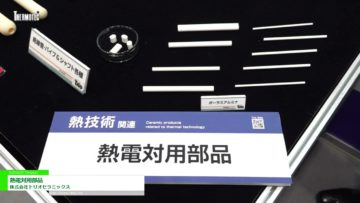
[THERMOTEC 2022] Thermocouple parts - Trio Ceramics Co., Ltd.
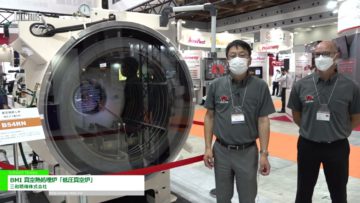
[THERMOTEC 2022] BMI Vacuum Heat Treatment Furnace "Low Pressure Vacuum Furnace" - Sanwa Seiki Co., Ltd.
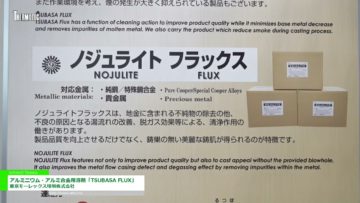
[THERMOTEC 2022] Solvent for aluminum / aluminum alloy "TSUBASA FLUX" - Tokyo Morex 坩 堝 Co., Ltd.
[THERMOTEC 2022] Work environment improvement "SFI service" - Showa Denki Co., Ltd.
[THERMOTEC 2022] Equipment management controller - Azbil Co., Ltd.
Featured Exhibitions by Year
 5 VideosPlay All
 THERMOTEC 2022
Benefits of Exhibiting
THERMOTEC is a specialized exhibition focused on industrial thermal technologies, including industrial furnaces, heat treatment equipment, combustion systems, heating elements, refractories, measurement and control equipment, material handling equipment, electric heating, energy, ICT, and DX. One of the major benefits of exhibiting is the opportunity to directly present technologies not only to industrial furnace manufacturers, but also to professionals from manufacturing industries that actually use thermal equipment, including heat treatment, steel, nonferrous metals, casting and forging, automotive, aerospace, industrial machinery, electronics and electrical equipment, materials, chemicals, and energy.
For industrial furnaces and heat treatment equipment, business discussions often begin not with simple product purchasing, but with specific factory-level challenges such as equipment renewal, energy saving, fuel conversion, quality stabilization, higher processing capacity, labor reduction, reduced maintenance workload, and carbon neutrality. This creates business opportunities not only for furnace manufacturers, but also for suppliers of burners, heating elements, refractories, sensors, control equipment, material handling systems, analysis software, DX solutions, and energy-related technologies.
Retrofitting and improving the energy efficiency of existing furnaces are also important themes. In some cases, improvements can be achieved without replacing the entire system by enhancing insulation, combustion, control, waste-heat utilization, electrification, measurement, or data utilization. It is therefore important to clearly demonstrate which part of the manufacturing process your product or technology can improve.
Research institutions, universities, trading companies, and distributors are also part of the target visitor audience, making THERMOTEC useful not only for selling to new customers, but also for developing partnerships such as joint research, technical cooperation, distributor relationships, and integration proposals with equipment manufacturers. For overseas manufacturers, clearly presenting their distributor network and technical service structure in Japan is particularly important during business discussions.
Key Preparation Points for Exhibitors
At THERMOTEC, abstract expressions such as “high efficiency,” “energy saving,” and “carbon neutrality” alone make it difficult for visitors to evaluate technological differences. It is therefore important to organize specific conditions and numerical data and prepare information that allows visitors to assess the benefits of introducing the technology into their own facilities.
- Clearly define the target furnace type, materials, manufacturing process, and temperature range
- Organize key specifications such as processing capacity, heating time, and temperature uniformity
- Show energy consumption and energy-saving effects
- Explain specifically how the technology contributes to CO2 emission reductions
- Clarify whether retrofitting or modification of existing equipment is possible
- Prepare before-and-after comparison data and installation case studies
- Organize equipment dimensions, required power, fuel, and utility conditions
- Be prepared to explain maintenance, parts supply, and service systems
- For overseas products, clearly explain the sales and maintenance structure in Japan
- If actual equipment cannot be brought to the venue, prepare exhibition videos, CG, or sectional models
Industrial furnaces and heat treatment equipment are often large systems permanently installed in factories, making it difficult to bring complete equipment to the exhibition venue. In such cases, combining furnace models, components such as burners and heating elements, processed samples, sectional displays, monitors, CG, and exhibition videos is effective for visually explaining “what is happening inside the furnace.”
When conducting operating demonstrations, exhibitors should confirm safety requirements in advance, including electrical capacity, high-temperature sections, rotating components, transport mechanisms, and compressed air. Demonstrations involving flames, high-temperature heating, gas, or similar elements may be restricted under venue or organizer regulations, so exhibitors should confirm whether such demonstrations are permitted and what applications are required.
Estimated Exhibition Costs
The cost of exhibiting at THERMOTEC should be planned to include not only booth fees, but also exhibition booth construction, transport of actual equipment, installation of heavy machinery, power supply, air supply, monitors, exhibition videos, sales staff, and technical personnel.
As a general reference, even a one-booth exhibit focused on small components or measuring equipment may require a total budget starting at around 1 million JPY. Exhibits involving large equipment, multiple booths, heavy machinery installation, electrical work, or large LED displays may cost several million JPY or more. The figures below are only general guidelines for planning. Please confirm exact fees with the exhibition organizer.
| Cost Item | General Estimate | Main Contents |
|---|---|---|
| Booth Fee | Several hundred thousand to around 1 million JPY per booth | Exhibition space; varies depending on the number of booths and exhibition conditions |
| Booth Construction | 500,000–3 million JPY or more | Walls, flooring, signs, display platforms, lighting, meeting areas, etc. |
| Electrical and Facility Work | Several tens to several hundreds of thousands of JPY or more | Power supply, lighting, air supply, wiring, demonstration equipment, etc. |
| Video and Monitor Equipment | 100,000–1 million JPY or more | Monitors, LED, playback equipment, exhibition video production, etc. |
| Personnel | Several hundred thousand JPY or more | Sales staff, technical explainers, reception staff, interpreters, demonstration staff, etc. |
| Transportation and Heavy Equipment Handling | Several tens to several hundreds of thousands of JPY or more | Equipment transport, forklifts, cranes, installation, removal, etc. |
Booth Fees
A single booth is suitable for companies focusing on relatively compact products such as burners, heating elements, refractories, sensors, measurement equipment, control equipment, and analysis software. Companies displaying large industrial furnaces or material handling equipment, or those that want both actual equipment displays and meeting space, may find two or more booths easier to arrange.
With four or more booths, exhibitors can separate areas for multiple systems, production-line demonstrations, presentation spaces, large LED displays, and business meetings. Booth locations, fees, and equipment conditions vary by event, so exact charges should be confirmed with the exhibition organizer.
Decoration and Booth Construction Costs
As a general reference, simple decoration using a system booth may start at around 500,000 JPY, while combining custom woodworking, large signs, original display platforms, monitors, and LED systems may cost approximately 1–3 million JPY or more.
Because THERMOTEC focuses on industrial products and equipment, it is more important to make it immediately clear “what thermal challenge the company can solve” than to make the booth itself visually extravagant. For example, large signage with messages such as “Reduce CO2 Emissions from Furnaces,” “Reduce Fuel Consumption,” “Improve Temperature Uniformity,” or “Predictive Maintenance” can make it easier for relevant engineers to identify and visit the booth.
When displaying large equipment, product dimensions and weight should be shared with the booth construction company at an early stage. When selecting an exhibition booth contractor, reviewing photographs of industrial machinery and heavy-equipment exhibits can help visualize how actual equipment and explanation spaces can be combined.
Personnel Costs
Because THERMOTEC generates many specialized technical questions, it is important to have not only sales personnel but also staff from design, engineering, development, and service departments. Even for one booth, approximately two to four staff members are generally recommended to divide responsibilities for visitor handling, technical explanation, and business meetings.
For industrial furnaces, discussions may progress from specific technical questions regarding operating temperature, processed materials, atmosphere, throughput, and connection conditions with existing equipment. Having technical staff capable of answering such questions on the spot makes it easier to move toward quotations and equipment evaluations after the exhibition.
Overseas manufacturers should arrange staff or interpreters capable of providing technical explanations in Japanese and be prepared to explain their maintenance and parts supply structure in Japan. Japanese companies targeting overseas markets can support communication with international visitors by preparing English materials and exhibition videos with English subtitles.
Transportation and Logistics Costs
Sensors and small equipment can generally be handled through standard exhibition logistics, while industrial furnaces, burner systems, material handling equipment, and similar products may be heavy machinery. Costs may range from several tens to several hundreds of thousands of JPY or more, and depending on the size and weight, forklifts, cranes, or special vehicles may be required.
For large equipment, exhibitors should confirm loading entrance dimensions, delivery schedules, floor load capacity, whether anchor fixing is permitted, and available electrical capacity in advance. When bringing actual equipment from overseas, early preparation is important for international transport, customs clearance, temporary importation, and re-export procedures.
Booth Examples by Size
1-Booth Exhibit
A one-booth exhibit is suitable for companies focusing on products such as combustion equipment, heating elements, refractories, sensors, measurement and control equipment, and analysis software. Actual products or processed samples can be placed along the aisle, while the wall prominently explains “which part of which process this technology improves.”
Monitors can show exhibition videos of actual equipment installation, operating scenes, temperature changes, and before-and-after energy consumption. This makes products easier to understand even when the complete equipment cannot be brought to the venue.
Because space is limited, adding too many display platforms can eliminate meeting space. Reviewing previous booth construction photographs while planning the balance between actual product displays, monitors, technical explanations, and business meetings can therefore be effective.
2-Booth Exhibit
With two booths, it becomes easier to separate actual equipment displays from business meeting areas. One possible layout is to show demonstrations of burners, material handling equipment, or measurement systems along the aisle and place tables for technical discussions inside the booth.
When exhibiting multiple related products, zoning them by process such as “Heating,” “Measurement,” “Control,” and “Energy Saving” makes it easier to communicate the proposal as an integrated system. Another effective approach is to show actual components while playing videos of installed systems in factories on a large monitor.
Reviewing construction photographs and case studies from industrial exhibitions of a similar scale makes it easier to plan a layout that balances large products, visitor flow, monitors, and business meeting areas.
4 Booths or More
With four or more booths, exhibitors can combine multiple actual machines, transport equipment, furnace models, processed samples, technical explanation zones, mini-seminar areas, large LED displays, and private meeting spaces.
Large equipment manufacturers can display furnaces, transport systems, controls, and measurement equipment in relation to one another so that visitors can visualize an actual heat treatment line and understand the proposal as a complete system rather than a single product. Large furnaces that cannot be brought to the venue can be represented using models and operating videos on large LED displays.
Booths combining heavy equipment, power supply, demonstration systems, and large-format video require not only decoration capability but also coordination of technical installation work. It is important to choose a contractor with experience in large machinery exhibitions and review their construction photographs, heavy-equipment handling experience, and large LED installation projects.
Key Points for a Successful Exhibition Booth
Visitor Flow Design
At THERMOTEC, engineers often visit with specific objectives and compare multiple products, making it important to separate areas for viewing actual equipment from areas for detailed technical discussions. Products and demonstrations should be visible from the aisle, with interested visitors naturally guided into internal meeting areas.
Large machinery can itself become a wall that blocks the booth. Equipment should therefore not be positioned too close to the aisle, and sufficient space should be provided for viewing key components and for technical staff to stand and explain them. When conducting operating demonstrations, safety distances and visitor waiting areas must also be considered.
Visibility
Because a company name alone often does not indicate the technical field of an industrial furnace supplier, signage that clearly communicates “what problem this company can solve” from the aisle is important.
- Company name and product category visible from a high position
- Catchphrases highlighting challenges such as “Energy Saving,” “Decarbonization,” and “Temperature Uniformity”
- Large photographs showing furnace interiors or installed equipment
- Sample displays showing differences before and after processing
- Large monitors showing equipment in operation
- Large LED displays showing the complete system
Because furnace interiors and equipment operation inside factories are difficult to communicate through physical exhibits alone, showing actual operating environments on monitors or LED displays makes it easier for visitors to understand the technology even from the aisle.
Demonstration Design
Burners, material handling equipment, control systems, measurement equipment, and similar technologies can be better understood through operating demonstrations. Showing temperature trends on control screens, acquiring data from sensors, or operating transport equipment can communicate technical characteristics more effectively than static displays.
However, many products at THERMOTEC involve high temperatures, combustion, electricity, and moving components, so safety must take priority. When actual high-temperature heating or combustion cannot be demonstrated at the venue, furnace interior footage, thermography, CG, and exhibition videos showing treatment processes are suitable alternatives.
The important point is not simply to make machinery move, but to communicate the implementation benefits together with the demonstration, such as “how fuel consumption changes,” “how temperature management improves,” or “how much operator workload can be reduced.”
Using Exhibition Videos
We strongly recommend using exhibition videos at THERMOTEC. Industrial furnaces and large heat treatment systems often cannot be brought to the exhibition venue, and displaying only the product itself may not sufficiently communicate its actual size, operating condition, treatment process, and implementation benefits.
A product or service video of approximately two to three minutes can incorporate industrial furnaces operating in actual factories, workpiece loading and transport, heating and cooling processes, control screens, and finished products, allowing viewers to understand the complete equipment operation in a short time.
For products such as burners, heating elements, and refractories whose value may be difficult to understand when viewed individually, video can show how they are used inside a furnace and explain the relationship between the product and the manufacturing process. For measurement and DX solutions, it is effective to visualize how data is collected from factory sensors and reflected on monitoring and analysis screens.
Showing video on large monitors or LED displays can attract attention from the aisle even when industrial products themselves have little visible movement. Because videos continue explaining equipment while staff members are engaged with other visitors, information can still be communicated during crowded periods or when staff are temporarily unavailable.
For complex equipment, exhibitors can combine actual footage with CG, furnace cross-sections, temperature distribution, and energy-flow graphics. Comparing “Before Introduction” and “After Introduction” and showing improvements in energy consumption, processing time, quality, and operator workload helps engineers and equipment managers evaluate the benefits of implementation.
When business discussions with overseas buyers or manufacturers are expected, English-language exhibition videos or videos with English subtitles are also effective. Showing equipment actually used in Japanese factories and implementation records in Japan can make the video useful as sales material for potential overseas distributors and manufacturing companies.
Our company can film product and service explanations by company representatives at the exhibition venue and edit them into exhibition videos of approximately two to three minutes. By having technical personnel themselves explain industrial furnaces, combustion equipment, measurement and control, refractories, heat treatment, DX, and other technologies, technical features that are difficult to communicate through catalogs alone can be preserved as video content.
Recorded videos can be distributed on the same day or the following day, allowing information to be published while THERMOTEC is still taking place. Information can reach factory personnel, engineers, and purchasing managers who were unable to visit THERMOTEC, overcoming barriers of time, location, national borders, and language.
Completed videos can also be reused on corporate websites, YouTube, SNS, sales emails, online business meetings, and distributor materials. By recording technical explanations repeatedly given at the exhibition, companies can continue using the content for sales and marketing after the event ends.
The exhibition itself lasts only a few days, but consideration of industrial furnaces and production equipment can continue for several months or longer. By continuously publishing exhibition videos on “Internet Exhibition.tv,” operated by our company, information can continue reaching companies that begin considering equipment renewal after the exhibition, as well as Japanese and overseas buyers who could not attend the event.
When video production is planned, monitor positions, LED displays, lighting, backgrounds, and filming space should be considered from the booth design stage. An exhibition booth construction company that can also handle video production can integrate actual equipment placement, filming angles, large monitor positions, and staff presentation areas into a single design.
Visitor Attraction Strategies for Better Exhibition Results
Email Outreach
Send exhibition invitations in advance to existing customers, companies considering equipment renewal, companies that previously received quotations, trading companies, and potential distributors. Rather than simply saying “We will exhibit,” it is important to explain specifically which technologies will be shown and what problems they can solve.
For example, messages such as “Reduce Fuel Consumption in Existing Furnaces,” “Reduce CO2 through Electrification,” “Improve Temperature Distribution,” and “Improve Maintenance Efficiency through Remote Monitoring” allow equipment managers to connect the exhibited technology with their own operational challenges.
For important customers, schedule meetings in advance and ask about their equipment specifications and current challenges so that more specific technical proposals can be made at the venue. Sending a two- to three-minute product explanation video beforehand also allows meetings to begin with detailed discussions rather than basic explanations.
Advance Promotion through SNS and Video
LinkedIn, X, YouTube, and similar platforms can be used to communicate information to manufacturing professionals and engineers. Combining exhibition announcements with technical information such as new technologies, implementation case studies, test data, and operating footage makes it easier to create a reason to visit the booth.
Publishing preview videos before the exhibition, technical explanations from the booth during the event, and videos recorded at the exhibition after it ends allows a single exhibition to become part of continuous information communication.
Individual Outreach to Key Customers and Potential Distributors
Industrial furnaces and production equipment often have long evaluation cycles, and initial contact at an exhibition may not immediately result in an order. Sales personnel should therefore individually contact existing customers, companies approaching equipment renewal, trading companies, distributors, and equipment manufacturers and invite them to visit with a specific discussion theme.
When considering overseas expansion, English materials and exhibition videos can also be shared in advance with potential overseas distributors and local equipment manufacturers to lead into meetings at the venue or online.
Using an Exhibition Landing Page
Creating a dedicated exhibition landing page that consolidates exhibited products and technical information provides a destination for visitors from email, SNS, and sales activities.
- Products and technologies to be exhibited
- Target manufacturing processes
- Problems the technology can solve
- Energy-saving and CO2 reduction effects
- Equipment specifications and supported temperature ranges
- Implementation case studies
- Demonstration and presentation details
- Booth information
- Business meeting reservation form
- Exhibition videos
QR codes can be printed on catalogs, business cards, and booth panels to direct visitors to the landing page or product videos. Rather than distributing all technical documents on paper, making detailed materials and videos available online can also support post-exhibition sales follow-up.
We recommend keeping the landing page online after the exhibition and adding exhibition videos and presentation materials recorded at the venue. It can also be used to generate inquiries from professionals searching after the event for issues such as “industrial furnaces,” “energy saving,” “heat treatment,” and “decarbonization.”
Company Available for Booth Construction and Exhibition Operation Consultation
At THERMOTEC, the required exhibition booth construction varies significantly depending on whether the products are industrial furnaces, heat treatment equipment, burners, material handling systems, refractories, measurement and control equipment, or DX solutions. When displaying large actual equipment, it is important to choose a contractor that can consider not only design, but also heavy equipment handling, electrical power, wiring, moving components, and safety measures.
When comparing contractors, we recommend reviewing construction photographs and previous case studies involving industrial machinery, manufacturing equipment, and heavy products. Looking at how large equipment is presented from the aisle and where technical explanation areas and meeting seats are positioned makes it easier to visualize the completed booth.
For large industrial furnaces that cannot be physically displayed, exhibition videos shown on monitors or large LED displays become especially important. Consulting an exhibition booth contractor that can also produce videos enables integrated planning of machinery displays, monitors, LED, lighting, and filming space so that technologies can be communicated clearly inside the booth.
When exhibiting overseas equipment, international transport, customs clearance, technical explanations in Japanese, and domestic maintenance support can also affect business negotiations. A company with experience in international exhibitions and multilingual support can make it easier to coordinate booth construction, interpretation, video production, and exhibition operation together.
In addition, filming product explanations by technical personnel at the exhibition venue and distributing them as two- to three-minute exhibition videos on the same day or the following day allows information to reach manufacturing professionals in Japan and overseas who were unable to visit THERMOTEC. Continuous publication on “Internet Exhibition.tv” enables explanations delivered during a few days of exhibition activity to be reused as long-term sales and technical PR assets.
For industrial furnace and thermal technology exhibitions, booth construction, heavy equipment handling, power supply, safety measures, monitors and large LED displays, exhibition videos, and technical explanation should not be considered separately, but designed as one integrated exhibition plan. When selecting a contractor, review industry-specific construction experience and project photographs and consider a company capable of supporting both actual equipment displays and video utilization.
Please see the exhibition booth construction company page below.
SPORTEC Booth Design & Construction Companies
Request a Booth Contractor Recommendation and Receive a Free Exhibitor Video Package
Submit your requirements and our team will recommend suitable contractors.
Looking for a booth design and construction company for this exhibition?
Tell us about your project and requirements.
Our team will review your request and introduce suitable contractors.
As a special benefit, exhibitors who request quotations through our service will receive a complimentary exhibitor video production package.
Your request is not automatically sent to all contractors. We carefully review your requirements and connect you with the most suitable companies.