

What is JIMA (Japan Inspection Instruments Manufacturers’ Show)?|A Specialized Exhibition for the Latest Technologies in Nondestructive Testing, Quality Control, and Equipment Maintenance

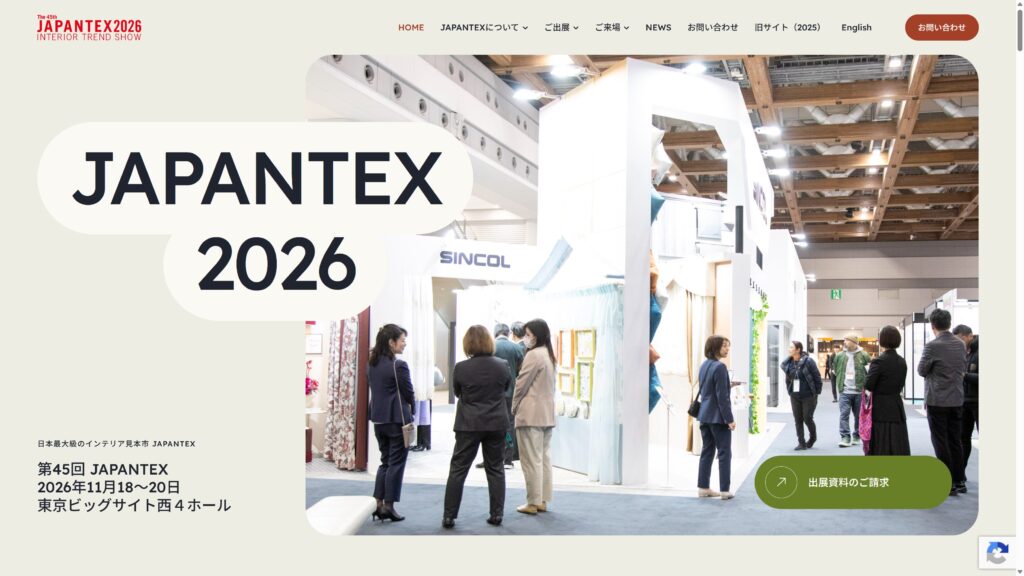
What is JIMA?
JIMA is a specialized exhibition bringing together equipment, materials, technologies, and information related to nondestructive testing. Organized by the Japan Inspection Instruments Manufacturers’ Association, it presents a wide range of inspection, measurement, testing, and evaluation technologies used in applications ranging from quality control in manufacturing to the maintenance and inspection of plants and social infrastructure.
Nondestructive testing is a technology used to examine internal and surface defects, material properties, dimensions, and other characteristics without damaging the object being inspected. JIMA covers a broad range of inspection methods, including ultrasonic, radiographic, eddy current, magnetic, penetrant, laser, thermographic, and optical inspection technologies.
Exhibition Overview
| Exhibition Name | JIMA2026 13th Japan Inspection Instruments Manufacturers’ Show |
|---|---|
| Dates | September 16 (Wed.)–18 (Fri.), 2026, 10:00–17:00 |
| Venue | Tokyo Big Sight, East Halls 1–3 |
| Organizer | Japan Inspection Instruments Manufacturers’ Association |
| Special Cooperation | The Sankei Shimbun |
| Admission | Free with registration |
Main Exhibit Categories
JIMA focuses primarily on nondestructive testing and features equipment and technologies used to inspect and evaluate products, materials, facilities, structures, and other objects.
Main Inspection Methods
- X-ray testing
- Gamma-ray and beta-ray testing
- Ultrasonic testing
- Eddy current testing
- Magnetic and magnetic particle testing
- Penetrant testing
- Strain measurement
- Leak testing
- Acoustic emission testing
- Visual and optical inspection
- Laser measurement and inspection
- Thermography
- Microwave-related technologies
Main Applications
- Dimensional measurement such as length, thickness, and width
- Material evaluation including material identification, conductivity, and hardness
- Inspection of welding and bonding defects
- Detection of cracks, lamination, and corrosion
- Detection of voids, porosity, foreign matter, and inclusions
- Residual stress measurement
- Food inspection
- Electronic component inspection
- Concrete inspection
Main Industries of Visitors
The exhibition is intended for engineers and professionals involved in inspection, measurement, testing, evaluation, and maintenance in manufacturing, social infrastructure, and related industries.
- Automotive and transportation equipment
- Electronics, semiconductors, and home appliances
- Food and medical-related products
- Heavy industry
- Civil engineering and construction
- Aerospace
- Railways and rolling stock
- Shipbuilding and marine industries
- Molds and dies
- Steel and smelting
- Metallic and non-metallic materials
- Glass, plastics, rubber, and ceramics
- Power generation and electric power
- Chemical, petroleum, and nuclear power plants
- Laboratories and testing facilities
- Universities and research institutions
Concurrent Exhibitions
JIMA is held concurrently with related exhibitions covering weighing and measurement, sensing, ground and infrastructure technologies, the forestry industry, and intellectual property. Visitors can access the concurrent exhibitions, creating opportunities to connect not only with nondestructive testing specialists but also with engineers and professionals seeking related technologies for equipment management and quality control.
- INTERMEASURE
- SENSOR EXPO JAPAN
- FORESTRISE
- Ground Technology Forum
- Patent & Information Fair & Conference
Notable Inspection Technologies
AI-Based Inspection
AI is increasingly being introduced into inspection technologies, with applications expanding to decision support using images and measurement data, automated inspection, and anomaly detection. Technologies that support human judgment while helping stabilize inspection quality and reduce labor requirements are becoming important themes in manufacturing.
Inspection Automation and Labor Saving
Manufacturing and equipment maintenance operations face challenges such as shortages of inspection personnel and the need to improve work efficiency. Automated inspection combining sensors, image processing, robots, and other technologies can improve the efficiency of inspection processes while also supporting inspection records and traceability.
Maintenance of Social Infrastructure
For social infrastructure such as bridges, tunnels, railways, and plants, nondestructive testing is important because it enables operators to assess conditions without shutting down or damaging equipment and structures. Inspection technologies are required to assess aging facilities and structures, support preventive maintenance, and improve safety.
Quality Control in Manufacturing
In industries such as automotive, aerospace, electronic components, and metalworking, inspections of product interiors, welded sections, and material properties are directly linked to quality assurance. In addition to higher speed, greater accuracy, and automation, integration of acquired inspection data with quality management systems is becoming increasingly important.
Technical Seminars and Academic Corner
In addition to the exhibition, technical seminars introducing new technologies and products, as well as an Academic Corner featuring presentations by universities and research laboratories, are planned at the venue.
A key feature of JIMA is that visitors can gather information not only by comparing inspection equipment, but also by learning about research trends in nondestructive testing, new inspection methods, and technologies incorporating AI and other advanced technologies.
Key Features of JIMA
- Specialized coverage of equipment, materials, technologies, and information related to nondestructive testing
- A broad range of inspection methods including ultrasonic, radiographic, eddy current, magnetic, penetrant, and optical testing
- Applications ranging from quality control in manufacturing to maintenance of social infrastructure
- Opportunities to compare new inspection technologies utilizing AI and sensing technologies
- Held concurrently with related exhibitions covering measurement, sensing, and other technologies
- Technical seminars and presentations by universities and research institutions
Visitor Trends and Needs
Visitors include engineers and professionals directly involved in inspection operations, including quality control, quality assurance, production engineering, equipment maintenance, research and development, testing, and evaluation.
For this reason, it is important to explain not only the measurement accuracy of inspection equipment, but also practical issues such as what types of defects can be detected, how much inspection time can be reduced, which processes can be automated, and whether the equipment can be integrated into existing facilities.
For inspection systems using AI and image processing, visitors may compare not only the judgment methods but also training data, storage of inspection results, and integration with existing production and quality management systems.
FAQ
What kind of exhibition is JIMA?
JIMA is a specialized exhibition for equipment, materials, technologies, and information related to nondestructive testing. It introduces inspection technologies for a wide range of applications, from quality control in manufacturing to maintenance of social infrastructure.
What types of inspection technologies are exhibited?
The exhibition covers a broad range of technologies including X-ray, ultrasonic, eddy current, magnetic and magnetic particle, penetrant, optical, laser, and thermographic inspection.
Which industries are the main target visitors from?
The main visitors are professionals involved in inspection, measurement, testing, evaluation, and maintenance in industries such as automotive, electronics and semiconductors, heavy industry, civil engineering and construction, aerospace, railways, shipbuilding, steel, and chemical, petroleum, and nuclear power plants.
Can visitors also see measurement and sensor technologies?
Related exhibitions such as INTERMEASURE and SENSOR EXPO JAPAN are held concurrently, allowing visitors to gather information not only on inspection technologies but also on measurement and sensing technologies.
Watch Exhibitor Videos
The videos shown below are randomly selected from this exhibition. To browse all videos from this exhibition, please see the “Featured Exhibitions by Year” section below.
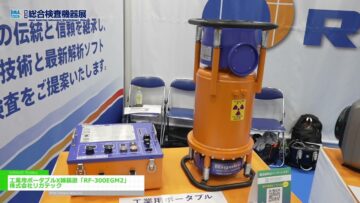
Portable industrial X-ray unit RF-300EGM2 - Rigatec Co.,Ltd. [JIMA 2026]
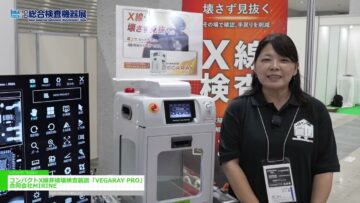
Compact X-ray non-destructive inspection system VEGARAY PRO - MIRINE LLC [JIMA 2026]
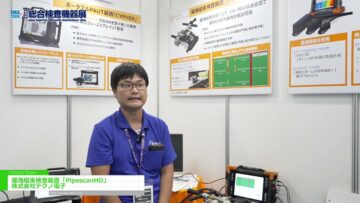
PipescanHD leak flux inspection system - E-TECHNO LTD. [JIMA 2026]
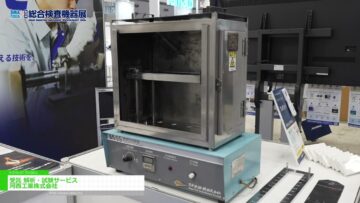
Analysis and testing contract services - KASAI KOGYO CO., LTD. [JIMA 2026]
Featured Exhibitions by Year
 4 VideosPlay All
Japan Inspection Instruments Manufacturers' Show / JIMA 2026
Benefits of Exhibiting
JIMA is a specialized exhibition where exhibitors can directly introduce their products to engineers who actually select and use inspection equipment in areas such as manufacturing quality control and quality assurance, production engineering, equipment maintenance, and research and development.
With nondestructive testing equipment, differences between products can be difficult to communicate through catalog specifications such as measurement accuracy and detection capability alone. By using actual workpieces to demonstrate defect detection and measurement, exhibitors can show operability, inspection speed, images, and data analysis, making product characteristics easier to understand.
Because nondestructive testing has applications across a wide range of industries, including automotive, aerospace, steel, plants, civil engineering, and construction, the exhibition can also be used to explore new applications and industries, develop integration projects with equipment manufacturers, and identify sales agents and technology partners.
Key Preparation Points for Exhibitors
- Clearly define the target inspection processes and the types of defects that can be detected
- Prepare inspection demonstrations using actual workpieces and test specimens
- Enable visitors to compare inspection speed, accuracy, and repeatability
- Explain differences from conventional inspection methods and implementation benefits with quantitative data
- Show actual screens when using AI, image processing, or data analysis
- For automated equipment, explain how it can be connected to existing production lines
- Organize information on inspection data storage, management, and integration with higher-level systems
- Confirm safety measures when using radiation, lasers, or similar technologies
- For large equipment, confirm power requirements,搬入 routes, and floor load capacity in advance
- Prepare English-language materials and videos when expecting international visitors
Estimated Exhibition Costs
Exhibition budgets should include not only booth space fees but also booth construction, electricity and communications, transportation of exhibition equipment, personnel costs, and video production. The following figures are general estimates for domestic B2B exhibitions in Japan. Actual costs vary depending on the number of booth units, construction method, and equipment to be exhibited. Contact the exhibition organizer for exact fees.
Booth Space Fee
As a general guideline, booth space typically starts from several hundred thousand yen per booth. When multiple booth units are used, space fees increase accordingly as the exhibition area expands.
Booth Decoration and Construction Costs
| Size | Estimated Construction Cost | Main Elements |
|---|---|---|
| 1 booth | Approx. JPY 300,000–800,000 | Display counters, company signage, lighting, graphics, monitors, etc. |
| 2 booths | Approx. JPY 700,000–1,500,000 | Live equipment demonstrations, multiple display counters, meeting space, large monitors, etc. |
| 4 booths or more | From approx. JPY 1,500,000 | Large equipment displays, multiple demonstration zones, large LED displays, meeting areas, etc. |
Personnel Costs
It is important to assign not only sales representatives but also technical staff who can explain inspection principles and technical specifications. For highly specialized products, exhibitors should be prepared to provide technical consultations to visitors who bring specific workpieces or inspection requirements.
Transportation and Logistics Costs
Small inspection instruments can generally be transported as ordinary cargo, while large X-ray inspection systems, automated inspection equipment, and inspection systems incorporating robots may require heavy-load transportation and professional installation.
Booth Examples by Size
1-Booth Stand
A one-booth stand is suitable for companies focusing on a limited range of products such as ultrasonic flaw detectors, sensors, thermography equipment, and portable inspection instruments. Actual equipment and test specimens can be positioned along the aisle so that inspection results can be demonstrated on the spot.
Even in a small booth, displaying inspection screens on a large monitor allows surrounding visitors to see the demonstration. When selecting a booth contractor, it is useful to review construction photos and previous projects to confirm that the company can design a one-booth stand where the actual equipment remains highly visible.
2-Booth Stand
A two-booth stand is suitable for companies exhibiting multiple types of inspection equipment or separating live demonstrations from technical consultation areas. An efficient layout places the demonstration area along the aisle and the meeting space toward the rear.
Display counters can also be divided by inspection method, allowing visitors to move directly to products that match their applications. Review previous booth construction photos and select a contractor with experience displaying manufacturing and industrial equipment.
4-Booth or Larger Stand
A larger stand is suitable for companies exhibiting large inspection systems, automated inspection lines, robotic inspection systems, or companies proposing multiple inspection methods as an integrated solution.
Large LED displays and monitors can show internal inspection processes and footage of equipment operating in actual factories, making the application easier to understand than displaying the equipment alone. When selecting a booth contractor, review its experience and construction photos involving large equipment, heavy loads, power requirements, and safety measures.
Key Points for a Successful Exhibition Booth
Visitor Flow Design
For inspection equipment, the booth should create a natural flow in which visitors see the product from the aisle, watch an actual inspection demonstration, review the inspection results, and then consult with technical staff. Equipment should also be positioned so that visitors watching demonstrations do not block the aisle.
Visibility
Rather than simply displaying “Nondestructive Testing Equipment,” use large messages that explain what the system can inspect, such as “Detect Internal Welding Defects,” “Automate Inspection Processes,” or “AI-Powered Visual Inspection.”
Use elevated signage, large photographs, lighting, monitors, and LED displays so visitors can understand the product application even from a distance.
Demonstration and Hands-On Experience
Demonstrating actual test specimens or products and displaying detected defects or measurement results on a monitor is an effective way to communicate the capabilities of nondestructive testing equipment.
Do not simply operate the equipment. Explain the benefits after implementation, such as reducing inspection time, reducing dependence on highly skilled inspectors, enabling 100% inspection, or detecting abnormalities before equipment shutdown becomes necessary.
Using Exhibition Videos
In nondestructive testing, actual inspection environments such as factories, plants, bridges, tunnels, and aircraft cannot always be reproduced inside an exhibition booth. For this reason, showing a two- to three-minute product or service introduction video on a large monitor can be effective.
Footage of actual inspection work, installation on production lines, objects being inspected, detection screens, and analysis results helps visitors understand how the equipment is used within a short period of time.
Videos can continue explaining products while staff members are speaking with other visitors, helping provide information during periods when booth personnel are occupied.
When presenting overseas products or serving international visitors, English-language videos or videos with English subtitles can also be prepared. Large monitors and LED displays can visually communicate inspection technologies to visitors walking through the aisles.
Another approach is to record a company representative explaining the product or service at the exhibition, edit the footage into a two- to three-minute exhibition video, and publish it on the same day or the following day. This makes it possible to deliver product information to people who could not attend the exhibition, regardless of time, location, country, or language.
The recorded videos can be reused on the company website, YouTube, social media, sales emails, and sales materials. By continuing to publish them on Internet Exhibition.tv after the exhibition, technical explanations provided at the venue can be turned into long-term sales and marketing assets.
By working with an exhibition booth contractor that can also handle video production, monitor placement, LED displays, lighting, live equipment demonstrations, and filming space can be planned together from the booth design stage.
Visitor Attraction Strategies for Better Exhibition Results
Email Marketing
Notify existing customers, prospective customers, equipment management personnel, quality control professionals, and other relevant contacts in advance, clearly explaining the inspection equipment and demonstrations that will be presented.
Rather than simply announcing “We will exhibit at JIMA,” provide a specific reason to visit the booth, such as “Live Demonstration of AI Visual Inspection” or “Ultrasonic Detection of Internal Defects.”
Social Media
Use LinkedIn, X, YouTube, and other platforms to introduce inspection demonstrations and new products before the exhibition. Short videos showing actual defect detection can effectively communicate inspection technologies that are difficult to explain with still images alone.
Invitations and Direct Mail
Send individual invitations or direct mail to important customers and companies with a high potential for implementation, and arrange meetings in advance. QR codes can also be used to direct recipients to an exhibition landing page or meeting reservation page.
Using an Exhibition Landing Page
A dedicated exhibition landing page can include the products being exhibited, problems they solve, inspection methods, demonstration details, implementation examples, booth information, meeting reservations, and exhibition videos.
By keeping the landing page online after the exhibition and adding product explanation videos recorded at the venue, it can continue to serve as a page for acquiring prospective customers through search engines and sales emails.
Companies Available for Booth Construction and Exhibition Support
For booth construction at JIMA, experience in exhibiting industrial equipment and inspection systems is important, along with the ability to handle live equipment demonstrations, heavy-load transportation, power supplies, networks, and safety management.
Equipment using X-rays, lasers, and similar technologies, as well as large inspection systems, may involve facility and safety requirements that differ from ordinary product displays. When selecting a booth contractor, it is useful to review its construction experience and project photos from industrial equipment and manufacturing exhibitions.
A booth contractor that also provides exhibition video production can integrate monitors, large LED displays, lighting, live equipment demonstrations, and filming areas into the overall booth design.
Recording a two- to three-minute product or technical explanation by a company representative at the venue and distributing it on the same day or the following day makes it possible to reach engineers and equipment professionals in Japan and overseas who could not attend the exhibition.
By continuing to publish the recorded videos on Internet Exhibition.tv after the exhibition, explanations provided at the venue can be reused as ongoing sales and technical communication content rather than ending with the event itself.
Please see the exhibition booth contractor pages below.
SPORTEC Booth Design & Construction Companies
Request a Booth Contractor Recommendation and Receive a Free Exhibitor Video Package
Submit your requirements and our team will recommend suitable contractors.
Looking for a booth design and construction company for this exhibition?
Tell us about your project and requirements.
Our team will review your request and introduce suitable contractors.
As a special benefit, exhibitors who request quotations through our service will receive a complimentary exhibitor video production package.
Your request is not automatically sent to all contractors. We carefully review your requirements and connect you with the most suitable companies.