What is IPF Japan (International Plastic Fair)? | Specialized Exhibition for Plastics, Rubber, Molding & Processing Machinery, Molds and Recycling Technologies
What is IPF Japan (International Plastic Fair)?
IPF Japan (International Plastic Fair) is an international specialized exhibition covering raw materials, molding and processing machinery, molds and dies, related equipment, products, recycling technologies and contract processing services for the plastics and rubber industries.
Organized by the International Plastic Fair Association, the exhibition is held once every three years. Plastics- and rubber-related companies from Japan and overseas present the latest molding and processing technologies, materials, equipment, products and services.
Professionals involved in R&D, product design, production engineering, manufacturing and procurement from a wide range of industries, including automotive, electrical and electronics, packaging, medical devices, consumer products and building materials, attend the exhibition to evaluate equipment, solve technical challenges and develop new business relationships.
A key feature of the exhibition is the ability to compare technologies across the entire plastics and rubber manufacturing process, from injection molding, extrusion, blow molding and thermoforming to molds, raw materials, testing and measurement, and recycling.
Event Overview
| Exhibition Name | IPF Japan 2026 (International Plastic Fair) – 11th Edition |
|---|---|
| English Name | IPF Japan 2026 (International Plastic Fair) |
| Dates | December 1, 2026 (Tuesday) – December 5, 2026 (Saturday) |
| Opening Hours | 10:00–17:00 (until 16:00 on the final day) |
| Venue | Makuhari Messe, Halls 1–8 |
| Address | 2-1 Nakase, Mihama-ku, Chiba-shi, Chiba |
| Organizer | International Plastic Fair Association |
| Frequency | Once every three years |
| Previous Edition | 853 exhibiting companies and organizations, 2,572 booths and 38,115 visitors (2023) |
| Admission | Free with advance registration on the official website. On-site registration requires a registration fee. |
| Official Website | https://www.ipfjapan.jp/ |
The previous-edition figures above are confirmed results from the 2023 exhibition and are not final exhibitor or visitor figures for 2026.
Main Exhibition Fields
Raw Materials & Additives
This area covers resin raw materials, rubber materials, additives, colorants, purging compounds and other materials that affect the performance and processability of plastics and rubber products.
Material technologies supporting lightweight products, higher functionality and improved environmental performance are introduced.
Injection Molding Machines
This category covers injection molding machines and related technologies used to inject plastic materials into molds and form products.
Technologies related to high-precision molding, energy saving, shorter molding cycles and automation are presented.
Extrusion Machinery
This area covers extrusion machinery and related equipment used to manufacture films, sheets, pipes, profiles and other products.
Products forming complete extrusion lines, including extruders, dies, take-off equipment and cooling systems, are presented.
Blow Molding & Thermoforming Machines
This category includes blow molding machines for manufacturing containers and hollow products, as well as thermoforming machines used to heat and form plastic sheets.
3D Printers & Additive Manufacturing
3D printers using resin materials, additive manufacturing systems and printing materials supporting prototyping and low-volume production are introduced.
Molding Machine Parts & Accessories
This area covers cylinders, screws, nozzles, heaters, hydraulic and pneumatic equipment and other components supporting the performance and stable operation of molding machines.
Molding-Related Equipment
Take-out robots, dryers, mixers, industrial robots, mold temperature controllers and other peripheral equipment supporting automation and stable quality in molding processes are presented.
Secondary Processing Machinery & Related Materials
This category covers printing machines, welding machines, cutting and trimming equipment, surface treatment machinery, deburring equipment and other machinery and materials used after molding.
Testing, Measurement, Inspection & Control Equipment
Testing machines, measuring instruments, sensors, controllers, ICT systems and software supporting molded-product quality control and manufacturing-process control are introduced.
Mold-Related Equipment & Materials
This area covers mold components, hot runners, mold machining equipment, mold-design software and other mold technologies required for plastics processing.
Recycling & Waste Treatment Equipment
Crushers, sorting machines, volume-reduction equipment and other systems related to plastics and rubber recycling and waste treatment are presented.
Factory Equipment & Materials
This category includes factory air-conditioning systems, dust collection and removal equipment, cleanrooms, automated warehouses and other infrastructure supporting manufacturing environments and logistics.
Products & Semi-Finished Products
Plastics and rubber processed products such as automotive parts, electrical and electronic components, medical components, sheets, films and molded rubber products are presented.
Contract Processing & Manufacturing
This area covers companies and services providing outsourced plastics and rubber molding, prototype production, mold manufacturing, metal processing and related operations.
Media & Information Services
Trade newspapers, magazines, books, industry associations and other companies and organizations involved in information services for the plastics and rubber industries are introduced.
Key Features of IPF Japan
An International Specialized Exhibition Held Every Three Years
IPF Japan is held once every three years and brings together plastics- and rubber-related companies from Japan and overseas to present their products and technologies.
Broad Comparison of Molding and Processing Technologies
Visitors can compare injection molding, extrusion, blow molding, thermoforming and other processing technologies through live machinery displays and technical presentations.
Covering Everything from Raw Materials to Products and Recycling
The exhibition covers the entire manufacturing process, including raw materials and additives, molding machines, molds, peripheral equipment, testing and measurement, products and recycling.
Applications Across Automotive, Electronics, Medical and Other Industries
Technologies can be proposed for a broad range of industries using plastics and rubber products, including automotive, electrical and electronics, packaging, medical devices and consumer products.
International Technical Exchange and Business Meetings
Interaction with overseas exhibitors and visitors provides opportunities to understand global technology trends and develop international sales channels.
Exhibition Scale
IPF Japan 2023 recorded 853 exhibiting companies and organizations, 2,572 booths and 38,115 visitors.
The 2026 edition will be held using Halls 1–8 at Makuhari Messe.
When comparing exhibitor and visitor numbers, distinguish the confirmed 2023 results from the event information for 2026.
Main Visitor Profiles
- Plastics and rubber molding and processing manufacturers
- Resin and rubber material manufacturers
- Automotive and automotive parts manufacturers
- Electrical and electronic equipment manufacturers
- Packaging and container manufacturers
- Medical device and healthcare manufacturers
- Consumer and household product manufacturers
- Building material and housing equipment companies
- Mold manufacturers and mold design companies
- Molding machine and industrial machinery manufacturers
- Recycling and environmental companies
- R&D and product design professionals
- Production engineering and manufacturing professionals
- Quality control and quality assurance professionals
- Equipment introduction and procurement professionals
- Universities and research institutions
Key Trends in the Plastics & Rubber Industries
Automation and Labor Saving in Molding Processes
Efforts to reduce labor requirements and improve productivity through take-out robots, automatic molding-machine control and integration with peripheral equipment are receiving growing attention.
Energy Saving and Higher Production Efficiency
Technologies that reduce manufacturing costs and environmental impact, including energy-efficient molding machines, shorter molding cycles and reduced material loss, are becoming increasingly important.
Recycling and Circular Manufacturing
Equipment and technologies supporting the circular use of plastics resources, including recycled resins, sorting, crushing and material recovery technologies, are attracting attention.
Bio-Based and Environmentally Conscious Materials
Material technologies such as bio-based resins and environmentally conscious materials are becoming increasingly important for reducing the environmental impact associated with resource use and product design.
High-Performance and High-Precision Molding
Industries such as automotive, electronics and medical devices require molding technologies capable of meeting increasingly demanding requirements for dimensional accuracy, durability and lightweight design.
Use of Manufacturing Data and Quality Management
Manufacturers are increasingly using sensors, measurement systems and production management software to optimize molding conditions and stabilize product quality.
FAQ
What kind of exhibition is IPF Japan?
IPF Japan is an international specialized exhibition covering plastics and rubber raw materials, molding and processing machinery, molds, related equipment, products, recycling and contract processing.
How often is IPF Japan held?
It is held once every three years.
What kinds of companies can exhibit?
Potential exhibitors include resin and rubber material manufacturers, molding machine manufacturers, mold manufacturers, peripheral equipment manufacturers, recycling-related companies and contract processing companies.
Is IPF Japan a consumer exhibition?
No. It is a professional exhibition primarily targeting companies and technical professionals in the plastics and rubber industries.
Is advance registration required for admission?
Visitors who register in advance through the official website can enter free of charge. On-site registration requires a registration fee.
When will the next edition be held?
IPF Japan 2026 will be held from December 1 to 5, 2026 at Makuhari Messe, Halls 1–8.
Watch Exhibitor Videos
The videos shown below are randomly selected from this exhibition. To browse all videos from this exhibition, please see the “Featured Exhibitions by Year” section below.
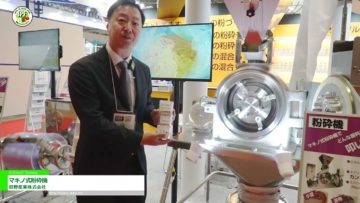
[IPF JAPAN 2023] Makino Crusher - Makino Sangyo Co.
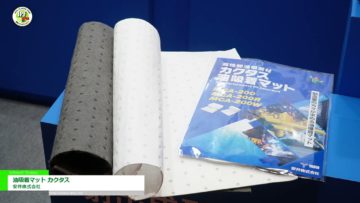
[IPF JAPAN 2023] Oil Absorption Mat Cactus - Yasui Corporation
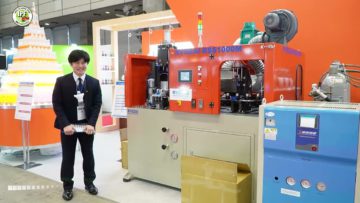
[IPF JAPAN 2023] Biaxial Stretch Blow Molding Machine "RYOZAI-RSS1000M" - Material Development Co., Ltd.
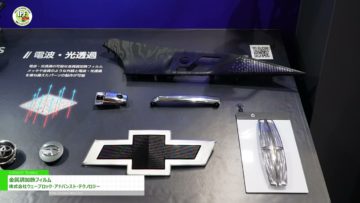
[IPF JAPAN 2023] Metal Finish Decorative Film - Wavelock Advanced Technology Co., Ltd.
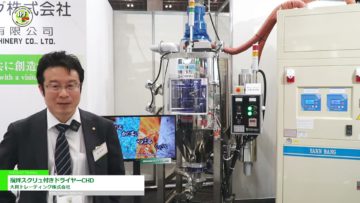
[IPF JAPAN 2023] Dryer CHD with Agitating Screw - Daido Trading Co.
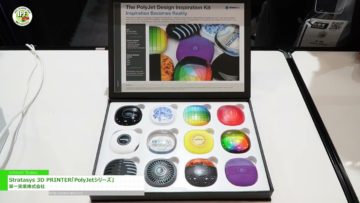
[IPF JAPAN 2023] Stratasys 3D PRINTER "PolyJet Series" - Daiichi Jitsugyo Co., Ltd.
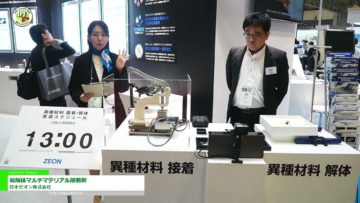
[IPF JAPAN 2023] Easy-Disassembly Multi-Material Adhesives - ZEON Corporation
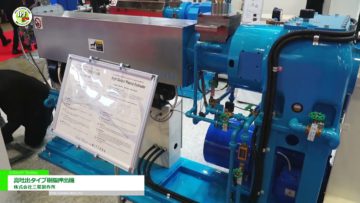
[IPF JAPAN 2023] High Discharge Resin Extruder - Mitsuba Corporation
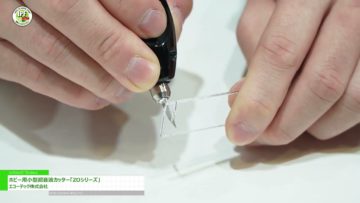
[IPF JAPAN 2023] Compact ultrasonic cutter "ZO series" for hobby use - EKO TEC CORPORATION
Featured Exhibitions by Year
IPF JAPAN 2023 (Japan)
Benefits of Exhibiting
IPF Japan (International Plastic Fair) is an international specialized exhibition where companies can directly present plastics and rubber raw materials, molding and processing machinery, molds, related equipment, products and recycling technologies to manufacturing professionals from Japan and overseas.
Exhibitors have opportunities to hold business discussions with professionals in R&D, product design, production engineering, manufacturing and procurement from automotive, electrical and electronics, packaging, medical device, consumer product and other manufacturing industries.
Live demonstrations of molding machines, material samples, molded-product displays and videos of manufacturing processes can be used to communicate product performance and implementation benefits in a concrete way.
Because the exhibition is held once every three years, it can also serve as an opportunity to present the results of new product and technology development and strengthen relationships with customers and distributors in Japan and overseas.
Key Points for Exhibition Preparation
Before exhibiting, clearly define the application areas you want to prioritize, such as automotive, electrical and electronics, packaging and medical, as well as target departments such as R&D, product design, production engineering and procurement.
For molding machines, organize information on clamping force, molding capacity, molding cycle, power consumption, compatible materials, installation requirements and maintenance support.
For resin and rubber materials, prepare documentation covering physical properties, heat resistance, strength, flowability, environmental performance, applicable standards and supply capacity.
For molds and precision processing technologies, present compatible materials, machining accuracy, processing dimensions, production lot sizes, lead times and quality management systems.
For recycling-related products, clearly indicate applicable resins, processing capacity, sorting accuracy, quality of recycled materials and energy consumption.
If live machinery demonstrations will be conducted, confirm requirements for electrical power, cooling water, compressed air, exhaust, machine weight, move-in routes and safety equipment in advance.
If business discussions with overseas companies are expected, prepare English technical documents, product catalogs and product videos with subtitles.
Estimated Exhibition Costs
Booth Fees
Exhibition fees vary according to the number of booths, exhibition area, exhibitor category and application conditions.
IPF Japan may offer different participation categories in addition to standard booths, including categories intended for contract processing companies.
When displaying large molding machines, check additional costs for the required floor area, electrical power, cooling water, compressed air and heavy-equipment handling.
Refer to the organizer’s latest exhibitor information for current exhibition fees and application conditions.
Booth Decoration & Construction Costs
As a general planning guide, booth construction may cost approximately JPY 300,000–800,000 for one booth, JPY 700,000–1,500,000 for two booths and JPY 1,500,000 or more for four or more booths.
These figures are general estimates for exhibition booth construction and are not official construction fees provided by the IPF Japan organizer. Booth fees and the costs of moving and installing large equipment are not included.
For live displays of injection molding machines, extrusion machines, blow molding machines and other large equipment, construction costs may increase considerably due to requirements for heavy equipment, dedicated electrical power, cooling systems and safety equipment.
When requesting a quotation from a booth contractor, provide the dimensions and weight of the exhibition machinery, required utilities, whether demonstrations will be conducted and the required meeting space.
Personnel Costs
In addition to sales staff, assign technical sales, R&D or production engineering personnel who can explain molding technologies, material properties, mold design and equipment implementation.
For live machinery demonstrations, staff responsible for equipment operation, safety management, material supply and removal of molded products will also be required.
To support business meetings with overseas companies, consider assigning personnel who can communicate in English or other foreign languages.
Transportation & Logistics Costs
Budget for the transportation, move-in and move-out, packaging, insurance, installation and removal of molding machines, molds, peripheral equipment, material samples and exhibition fixtures.
For large machinery, confirm delivery vehicles, forklifts, cranes, floor load capacity, move-in routes and installation procedures.
For resin materials and molded products, storage conditions, humidity control and packaging methods should also be considered.
For exact costs, contact the exhibition organizer.
Booth Examples by Size
1 Booth
Suitable for presenting resin and rubber materials, additives, mold components, precision molded products and contract processing services.
Combine material samples, molded products, performance comparison data, technical information panels and monitors to communicate technical advantages quickly.
2 Booths
A layout can combine live displays of compact molding machines or peripheral equipment with comparative product samples and a technical consultation area.
Show materials or molded products before and after processing, measurement results and manufacturing-process videos to clearly communicate implementation benefits.
4 Booths or More
Suitable for companies presenting multiple molding machines or processing technologies.
The booth can combine live machinery demonstrations, molded-product displays, material and mold exhibits, technical seminars and business meeting areas.
When displaying large molding machines or moving equipment, the layout should incorporate electrical power, cooling equipment, safety measures and visitor circulation.
When selecting a booth contractor, review its experience with industrial machinery, plastics and rubber exhibitions, heavy-equipment handling records, previous booth photographs and project portfolio.
Key Points for a Successful Exhibition Booth
Visitor Flow Design
Separate the flow of visitors watching live machinery demonstrations, engineers examining materials and molded products, and professionals seeking detailed business discussions.
For demonstrations of large molding machines, provide a safe viewing area that prevents visitors from approaching moving parts or high-temperature areas.
If equipment introduction or material adoption consultations are a priority, design a natural route from the exhibition area to the technical consultation area.
Visibility
Ensure that the brand name, technology field and problems solved by the product are clearly visible from the aisle.
Communicate implementation benefits concisely, such as “shorter molding cycles,” “energy saving,” “high-precision molding,” “reduced material loss” and “compatibility with recycled resins.”
Displaying comparative molded-product samples, performance data and implementation examples helps visitors quickly determine the relevance of the solution to their own challenges.
Demonstration & Experience Design
For injection molding machines, live demonstrations showing the molding process, molding cycle and integration with take-out robots are effective.
For extrusion and blow molding machines, demonstrate the production process and the quality of finished products.
For resin and rubber materials, comparative samples showing strength, heat resistance, lightweight performance and recyclability are effective.
During demonstrations, consider electrical power, high-temperature areas, moving parts, material handling and visitor safety.
Using Video at the Exhibition
Showing product introduction videos of approximately 2–3 minutes on monitors or LED displays inside the booth can efficiently explain injection molding, extrusion, blow molding, mold processing and recycling processes.
Video is particularly effective for showing content that is difficult to reproduce at the exhibition venue, such as actual factory operation, internal structures of molding machines, manufacturing processes and quality comparisons of molded products.
If you plan to communicate with plastics and rubber companies overseas, consider multilingual support such as English subtitles.
Looping videos allows visitors to continue receiving product information even while staff are engaged in technical consultations or business meetings.
Another option is to film product explanations by company representatives or technical personnel at the exhibition and edit them into approximately 2–3 minute videos for publication on the same day or the following day.
The completed videos can be reused on the company website, YouTube, social media, sales emails, product pages and materials for overseas distributors.
By continuing to publish them on Internet Exhibition.tv, product information can also reach R&D, production engineering and manufacturing professionals in Japan and overseas who were unable to attend the exhibition.
Videos showing molding machine operation and material technologies can become long-term assets for sales and technical communication even after the exhibition has ended.
If a booth contractor can provide both booth construction and video production, the placement of machinery, lighting, monitors, LED displays, safety equipment and filming positions can be planned together from the design stage.
Strategies to Attract Visitors and Improve Exhibition Results
Email Marketing
Send exhibition announcements to R&D and production engineering professionals at automotive, electrical and electronics, packaging and medical device manufacturers, as well as existing customers and companies considering equipment investment.
Introduce the products to be exhibited, technical features, scheduled live demonstrations and booth number to encourage advance meeting reservations.
Social Media
Use LinkedIn, YouTube and other platforms to publish videos of molding machines in operation, manufacturing processes, material technologies and implementation examples.
Short videos showing molded-product quality and improvements in manufacturing processes can increase interest among R&D and production engineering professionals.
Invitations & Direct Mail
Send individual invitations and technical materials to R&D, product design and equipment introduction departments at manufacturers you want to target.
Provide the schedule for live machinery demonstrations and technical consultations to encourage concrete business meeting reservations.
Exhibition Landing Page
Create a dedicated exhibition Landing Page with exhibited products, booth number, technical specifications, molding examples, product videos, catalogs and a technical consultation reservation form.
After the exhibition, the page can continue to serve as an information resource for companies considering equipment investment, material adoption or joint development.
Companies Available for Booth Construction and Exhibition Operations Consultation
When exhibiting at IPF Japan, it is important to select a booth contractor capable of handling technical displays involving molding machines, molds, industrial machinery and resin and rubber materials.
Confirm its ability to support the move-in and installation of large equipment, heavy-load requirements, electrical work, cooling systems, live machinery demonstration areas, safety equipment, lighting, monitors and LED displays according to the exhibition requirements.
Product demonstrations and explanations by technical personnel can also be filmed at the exhibition and edited into approximately 2–3 minute videos on the same day or the following day for use in communications during the event.
By continuing to publish completed videos not only on the company website and social media but also on Internet Exhibition.tv, product information can continue reaching R&D, production engineering and manufacturing professionals in Japan and overseas even after the exhibition ends.
Please see the booth construction company pages below.
SPORTEC Booth Design & Construction Companies
Request a Booth Contractor Recommendation and Receive a Free Exhibitor Video Package
Submit your requirements and our team will recommend suitable contractors.
Looking for a booth design and construction company for this exhibition?
Tell us about your project and requirements.
Our team will review your request and introduce suitable contractors.
As a special benefit, exhibitors who request quotations through our service will receive a complimentary exhibitor video production package.
Your request is not automatically sent to all contractors. We carefully review your requirements and connect you with the most suitable companies.