What is GOOD LIFE Fair?|A Lifestyle Exhibition Focused on Comfortable, Fulfilling Living and the SDGs
What is GOOD LIFE Fair?
GOOD LIFE Fair is a lifestyle exhibition centered on “comfortable and fulfilling living” and the SDGs, bringing together products, services, and experiences from across Japan that enrich everyday life. Organized by The Asahi Shimbun Company, the exhibition is held at Tokyo Big Sight.
It covers a wide range of fields closely related to consumers’ daily lives, including food, clothing and housing, health and beauty, regional products, organic products, environmentally conscious products, leisure, and learning for parents and children. Rather than simply displaying products, the exhibition enables visitors to experience their value firsthand through shopping, food and beverage tastings, workshops, and other hands-on activities.
The exhibition targets not only general consumers but also business visitors from retail, distribution, wholesale, trading companies, and other sectors, allowing exhibitors to conduct both BtoC product promotion and sales and BtoB sales channel development at the same venue.
Event Overview
| Exhibition | GOOD LIFE Fair 2026 |
|---|---|
| Dates | September 25 (Fri.)–27 (Sun.), 2026 |
| Hours | 10:00–17:00 (until 18:00 on the first day) |
| Venue | Tokyo Big Sight, West Halls 2–4 |
| Organizer | The Asahi Shimbun Company |
| Cooperation | TV Asahi |
| Scale | Approximately 600 exhibitors planned |
| Target Visitors | Consumers interested in creating a comfortable and fulfilling lifestyle, as well as corporate representatives and buyers seeking lifestyle- and SDGs-related products |
| Admission | Advance registration required |
Exhibition Scale
At the previous event, 530 companies exhibited and 36,598 people attended. Approximately 600 exhibitors are planned for 2026, including a diverse range of lifestyle-related companies, local governments, and organizations involved in food, household goods, housing, health and beauty, regional products, and sustainable products.
Another feature of the exhibition is that it targets both general consumers and business visitors. Exhibitors can introduce products directly to consumers while also creating business opportunities with companies involved in distribution, retail, wholesale, and trading.
Main Exhibition Categories
GOOD LIFE Fair presents a wide range of products and services centered on everyday living.
- Food and beverages
- Regional foods and specialty products
- Household and lifestyle goods
- Fashion and daily necessities
- Health and wellness
- Beauty and natural products
- Housing and interiors
- Residential environment-related services
- Organic products
- Environmentally conscious products and services
- Products, tourism, and regional resources presented by local governments and communities
- Education and services for parents and children
- Leisure and recreational products
- Disaster prevention and safety products
- Products and initiatives related to the SDGs
Six Lifestyle Areas
The venue introduces a broad range of products and services related to everyday living, structured around themes that are easy for consumers to engage with, including shopping, tasting and hands-on experiences, learning, health and beauty, comfortable living, and organic products and the SDGs.
Direct Contact with Consumers
At GOOD LIFE Fair, visitors can do more than simply look at products. Programs are designed to allow them to purchase products, taste food and beverages, and experience products and services firsthand.
Because exhibitors can introduce new products directly to actual consumers and observe reactions to taste, usability, design, price, and other factors, the exhibition can be used not only for product promotion but also for test marketing and building a customer fan base.
Developing Sales Channels with Business Visitors
GOOD LIFE Fair is not exclusively a consumer event. Business visitors include representatives from retail, distribution, wholesale, trading companies, department stores, food-related companies, hotels, railway and transportation companies, and housing-related businesses.
The official website lists companies from a broad range of sectors among previous visitors, including department stores, supermarkets, retailers, food distributors, trading companies, hotels, railway companies, and housing-related businesses.
For manufacturers and regional businesses, the exhibition can therefore serve as a venue for developing new sales channels by finding new retailers, wholesalers, and other business partners while simultaneously promoting products to consumers.
Opportunities for Regional Products and Local Governments
Because food, crafts, regional brands, tourism resources, and other offerings can be introduced directly to consumers, the exhibition is also well suited to local governments and regional businesses.
Rather than presenting individual products alone, exhibitors can combine them with stories about the region, food culture, craftsmanship, and tourism, helping generate interest in the region itself.
Key Lifestyle Themes
Sustainable Product Choices
In addition to environmental considerations, products and services that consumers can confidently choose based on factors such as durability, local production, carefully selected materials, and manufacturing methods are becoming increasingly important.
Health and Wellness
Products and services that help people maintain their health in everyday life, including food, sleep, exercise, beauty, and self-care, are important themes in the lifestyle market.
Understanding Products Through Experience
Experiences such as tasting food and beverages, trying beauty products, or touching and using housing-related products allow exhibitors to communicate value that can be difficult to convey through websites and advertising alone.
The Story Behind the Product
At GOOD LIFE Fair, it is important to communicate not only product functions but also the story behind the product, including its materials, producers, region of origin, development background, and environmental considerations.
Features of GOOD LIFE Fair
- Covers a wide range of lifestyle fields centered on food, clothing, and housing
- Enables exhibitors to approach both general consumers and business visitors
- Supports not only product sales but also tastings and hands-on exhibits
- Allows exhibitors to introduce diverse products related to food, health and beauty, housing, and regional specialties
- Provides opportunities to propose products based on the SDGs and sustainable lifestyles
- Enables consumer promotion and sales channel development with retailers and distributors at the same event
Visitor Trends and Needs
General visitors are looking not only for new products but also for experiences such as eating, drinking, touching, using, and learning. Exhibits that allow visitors to experience the value of a product are therefore more important than simply displaying products on shelves.
Business visitors, meanwhile, are looking for distinctive products with strong stories and products that can contribute to new retail concepts. In addition to explanations for general consumers, exhibitors should prepare information required for business negotiations, such as wholesale prices, minimum order quantities, delivery times, sales channels, and OEM and private-label capabilities.
FAQ
What kind of exhibition is GOOD LIFE Fair?
GOOD LIFE Fair is a lifestyle exhibition centered on comfortable and fulfilling living and the SDGs, bringing together food, household goods, health and beauty products, housing-related products, regional specialties, organic products, and more.
Do general consumers attend the exhibition?
General consumers are a major target audience and can enjoy purchasing products, tasting food and beverages, and participating in hands-on experiences. Free registration is also available for business visitors.
Can the exhibition be used for BtoB business negotiations?
Representatives from a wide range of companies, including retailers, distributors, wholesalers, trading companies, and department stores, attend the exhibition, making it useful for developing new business partners and sales channels.
What types of companies are suited to exhibiting?
The exhibition is suitable for companies and regional businesses in fields such as food and beverages, household goods, health and beauty, housing, regional products, and organic products that want to communicate product value directly to consumers or develop new sales channels.
Watch Exhibitor Videos
The videos shown below are randomly selected from this exhibition. To browse all videos from this exhibition, please see the “Featured Exhibitions by Year” section below.
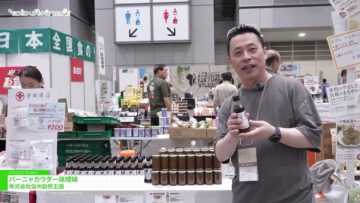
Flavoured yakiniku sauce and bagna cauda miso - SHINSHU SHIZEN OKOKU CO., LTD. [GOOD LIFE Fair 2026]
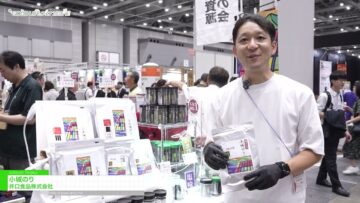
Nori products - Inokuchi Shokuhin [GOOD LIFE Fair 2026]
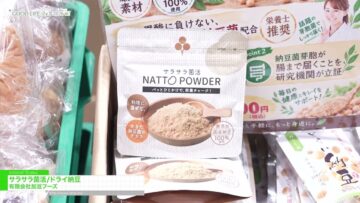
Natto powder and dried natto at GOOD LIFE Fair 2026
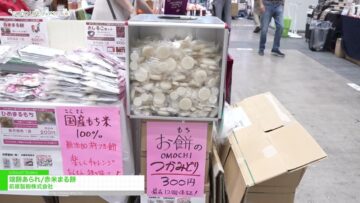
Haba mochi arare and red rice mochi - Maeharaseifun Co.,Ltd [GOOD LIFE Fair 2026]
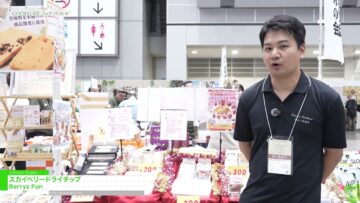
Skyberry dry chips - Berryz Fun [GOOD LIFE Fair 2026]
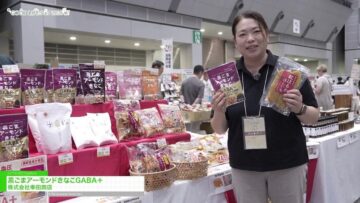
Black sesame almond kinako GABA+ - KOUTA SHOUTEN & CO.LTD [GOOD LIFE Fair 2026]
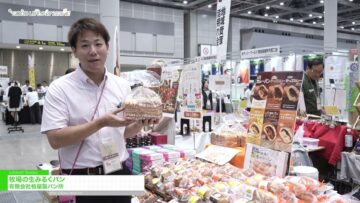
Milky farm bread - Oak bakery [GOOD LIFE Fair 2026]
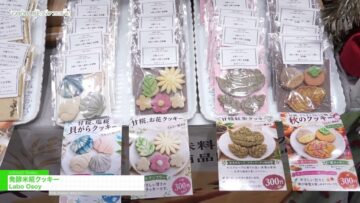
Fermented rice koji cookies - Labo Osoy [GOOD LIFE Fair 2026]
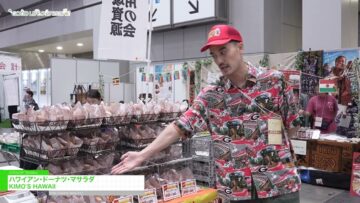
Hawaiian malasadas - KIMO'S HAWAII [GOOD LIFE Fair 2026]
Featured Exhibitions by Year
GOOD LIFE Fair 2026
Benefits of Exhibiting
One of the key features of GOOD LIFE Fair is that exhibitors can promote and sell products to general consumers while also developing sales channels with buyers at the same exhibition.
For products used directly by consumers, such as food, household goods, health and beauty products, housing-related products, and regional specialties, exhibitors can explain their products directly to visitors and evaluate consumer reactions through tastings, hands-on experiences, and on-site sales.
At the same time, exhibitors can connect with business visitors from retail, distribution, wholesale, trading companies, department stores, and other sectors. Manufacturers can develop new retail and wholesale channels, regional businesses can expand distribution beyond their local areas, and companies offering OEM services can pursue negotiations for private-label products and other business opportunities.
Key Points for Exhibition Preparation
- Prepare separate messages for general consumers and buyers
- Create concise messages that communicate product features quickly
- Prepare food and beverage tastings for food products
- Provide hands-on trials for beauty and health products
- Recreate actual usage scenarios for household products
- Organize the story behind the product, including materials, place of production, and development background
- Prepare BtoB sales materials covering wholesale prices, minimum order quantities, delivery times, and other business terms
- Clearly indicate OEM and private-label capabilities where available
- When selling products, establish systems for inventory, payment, and product replenishment
- For food products, confirm hygiene management and refrigeration or freezing requirements
At exhibitions with large numbers of general visitors, it is important to incorporate experiences such as eating, drinking, touching, trying, and making rather than relying only on displays that visitors read.
Estimated Exhibition Costs
An exhibition budget should include not only booth space fees but also booth construction, product transportation, personnel, tasting and experience equipment, and video production. The following figures are general estimates for participating in lifestyle-related exhibitions in Japan. Actual costs vary depending on the exhibition plan and booth construction. Check with the exhibition organizer for exact pricing.
Booth Space Fees
At a typical exhibition, a standard single booth generally starts at several hundred thousand yen. GOOD LIFE Fair offers multiple exhibition plans depending on the content and area, so exhibitors should check the latest exhibitor information.
Booth Decoration and Construction Costs
| Size | Estimated Construction Cost | Main Elements |
|---|---|---|
| 1 booth | Approximately JPY 300,000–800,000 | Product shelves, display counters, signage, lighting, graphics, monitors, etc. |
| 2 booths | Approximately JPY 700,000–1,500,000 | Product displays, tasting and experience areas, meeting seats, large monitors, etc. |
| 4 booths or more | From approximately JPY 1,500,000 | Large custom structures, multiple product zones, experience areas, large LED displays, meeting spaces, etc. |
Personnel Costs
Staff may include product explanation personnel, sales staff, and business negotiation representatives. Food exhibitors may require staff responsible for tastings or cooking, while beauty products and experience-based services may require staff to conduct demonstrations.
Transportation and Logistics Costs
Logistics costs for transporting products into and out of the venue and replenishing inventory should also be considered. Food products may require refrigerated or frozen transportation, while furniture and housing equipment may require additional costs for transporting large items.
Booth Examples by Size
1-Booth Setup
A single booth is suitable for companies focusing on a limited range of products such as food, beverages, cosmetics, household goods, and regional specialties.
Place key products along the aisle and provide tastings for food and beverages, hands-on trials for beauty products, or displays that allow visitors to pick up and examine household goods.
In a small booth, avoid overcrowding the space with too many shelves. The design should allow visitors to understand from a distance what the product is and who it is intended for. When selecting a booth contractor, reviewing photographs of single-booth projects and previous lifestyle exhibition projects can be useful.
2-Booth Setup
A two-booth setup is suitable for companies presenting multiple product categories or separating product displays from experience and business negotiation areas.
By placing product displays, tastings, and experience areas along the aisle and creating meeting space for buyers toward the rear, exhibitors can combine consumer promotion with BtoB negotiations.
4 Booths or More
Larger booths are suitable for companies with multiple brands or companies that want to recreate actual living environments for products such as housing, furniture, and home appliances.
Product displays, hands-on experiences, stages, meeting areas, and large LED displays can be combined to create a booth where visitors experience the brand’s overall world and concept.
For larger booths, it is important to review previous construction photographs and select a contractor with experience in product sales, experiential exhibits, and BtoC events.
Key Points for a Successful Exhibition Booth
Visitor Flow Design
At GOOD LIFE Fair, the booth needs to accommodate both the consumer journey of seeing, trying, and purchasing products and the business visitor journey of meeting with company representatives.
Design the visitor flow so that people waiting for tastings or experiences do not block aisles or meeting areas, and visitors can move naturally from product experiences to purchases or business discussions.
Visibility
In addition to the brand name, display messages that allow visitors to understand the product’s characteristics at a glance, such as “Made with Japanese Organic Ingredients,” “Using Regional Materials,” “Reducing Food Loss,” or “Household Products Designed for Long-Term Use.”
Use large product photographs, elevated signage, lighting, monitors, and LED displays to create an exhibit that can attract visitors’ attention within a few seconds.
Demonstrations and Hands-On Experiences
Provide experiences suited to the product category, such as food and beverage tastings, trials of beauty products, opportunities to experience housing and furniture products, or demonstrations showing how household goods are used.
Rather than simply allowing visitors to try a product, communicate how it can change everyday life, how it differs from conventional products, and what value it can create for the environment or local communities.
Using Exhibition Videos
GOOD LIFE Fair is particularly well suited to exhibition videos as a way to communicate the stories behind products.
A two- to three-minute product or service introduction video can show the production area and producers for agricultural products, manufacturing processes for food products, actual usage scenes for household goods, or local landscapes and craftsmanship for regional products.
Showing materials, manufacturing processes, developers’ ideas, and actual usage scenes on a large monitor can help visitors understand aspects of a product that cannot be communicated by displaying the product alone.
Videos can continue explaining products while staff members are occupied with sales or business negotiations, helping supplement information provided inside the booth.
Another approach is to film a company representative or producer explaining the product or service at the exhibition, edit it into a two- to three-minute exhibition video, and distribute it on the same day or the following day.
This allows product information to reach people who could not visit the venue, regardless of time or location. Creating an English-language version or adding English subtitles can also support communication with overseas buyers and consumers.
Exhibition videos can be reused on the company’s website, YouTube, social media, sales emails, and product introduction pages. By continuing to publish them on Internet Exhibition.tv after the exhibition, product explanations given at the venue can become long-term sales and marketing assets.
Working with an exhibition booth contractor that also provides video production makes it possible to plan monitor positions, large LED displays, lighting, product displays, experience areas, and filming spaces as an integrated part of the booth design.
Visitor Attraction Strategies for Better Exhibition Results
Email Marketing
Inform existing customers, business partners, prospects, and potential retailers in advance. Rather than simply saying “We will exhibit a new product,” provide specific reasons to visit, such as “Product tastings available,” “Experience our new product before launch,” or “Business meetings available for buyers.”
Social Media
Use Instagram, X, YouTube, LinkedIn, and other platforms according to the target audience. For general consumers, communicate product visuals and hands-on experiences. For business audiences, provide information about new products, OEM and private-label capabilities, and wholesale opportunities.
In addition to pre-event announcements, publish booth videos and product introductions during the exhibition to reach people who cannot visit the venue.
Invitations and Direct Mail
Contact important retailers, distributors, wholesalers, and existing business partners individually and schedule meetings in advance. QR codes can also direct recipients to an exhibition landing page or meeting reservation page.
Using an Exhibition Landing Page
A dedicated exhibition landing page can include exhibited products, product features, problems they solve, tasting and experience details, product stories, implementation and sales examples, booth information, meeting reservations, and exhibition videos.
Keeping the landing page online after the exhibition and adding videos filmed at the venue allows it to continue supporting consumer product promotion and sales activities targeting buyers.
Companies Available for Booth Construction and Exhibition Operations Consultation
Booth construction for GOOD LIFE Fair differs from that of a typical BtoB exhibition because the design and operation may need to accommodate not only product displays but also sales, food and beverage tastings, workshops, and hands-on experiences.
Depending on the exhibit, facilities such as water supply and drainage, refrigeration and freezing equipment, electrical power, and hygiene management may be required for food products. Beauty products may require experience areas, while housing and furniture exhibits may require arrangements for transporting large products.
When selecting a contractor, review its experience in constructing booths for lifestyle, food, and consumer goods exhibitions and compare previous project photographs to see how product displays, sales, experiences, and business meeting areas have been combined.
A contractor that can also produce exhibition videos can integrate product displays, monitors, large LED displays, lighting, experience areas, and filming spaces into the overall booth plan.
Filming a two- to three-minute product explanation by a company representative or producer at the venue and distributing it on the same day or the following day makes it possible to reach consumers and buyers who could not attend the exhibition.
By continuing to publish the recorded videos on Internet Exhibition.tv after the exhibition, explanations given at the venue can be used as ongoing content for sales channel development and product promotion rather than ending with the event itself.
Please see the exhibition booth contractor pages below.
SPORTEC Booth Design & Construction Companies
Request a Booth Contractor Recommendation and Receive a Free Exhibitor Video Package
Submit your requirements and our team will recommend suitable contractors.
Looking for a booth design and construction company for this exhibition?
Tell us about your project and requirements.
Our team will review your request and introduce suitable contractors.
As a special benefit, exhibitors who request quotations through our service will receive a complimentary exhibitor video production package.
Your request is not automatically sent to all contractors. We carefully review your requirements and connect you with the most suitable companies.