What is FOOMA JAPAN? | One of the World’s Largest Comprehensive Food Manufacturing Exhibitions, Bringing Together Food Processing Machinery and Food Tech
What is FOOMA JAPAN?
FOOMA JAPAN is a comprehensive food manufacturing exhibition that brings together cutting-edge technologies, products and services related to food production, centered on food machinery and equipment.
A wide range of solutions covering food factory processes can be compared in one venue, from raw material processing and food manufacturing and processing to packaging and filling, robotics and automation, hygiene management, quality control, storage and logistics, IT and AI.
Since its first edition in 1978, the exhibition has served as a gathering place for technologies, equipment and information related to food manufacturing. In 2027, it will mark its 50th edition.
Event Overview
| Exhibition | FOOMA JAPAN 2027 |
|---|---|
| Dates | June 8, 2027 (Tuesday) – June 11, 2027 (Friday) |
| Hours | 10:00–17:00 |
| Venue | Tokyo Big Sight, East Exhibition Halls 1–8 |
| Organizer | Japan Food Machinery Manufacturers’ Association |
| Theme | CREATE THE FUTURE WITH FOOMA ! |
Main Exhibit Categories
- Raw material processing
- Food manufacturing and processing
- Confectionery and bakery production
- Meat and seafood processing
- Noodle production
- Prepared food and cooked food production
- Beverage and dairy production
- Agricultural product processing
- Tofu and soybean processing
- Fermentation and brewing
- Filling and packaging
- Weighing and measurement
- Inspection and quality control
- Hygiene management
- Robotics and automation
- Conveyance, storage and logistics
- Food factory equipment
- Environmental measures and energy saving
- IT, IoT and AI
- Food manufacturing-related services
Food Manufacturing and Processing Machinery
Food manufacturing and processing machinery forms the core of FOOMA JAPAN.
Manufacturing equipment and processing technologies are exhibited for a wide range of food sectors, including confectionery and bakery products, meat and seafood, noodles, prepared and cooked foods, beverages and dairy products, agricultural products, tofu, fermentation and brewing.
Many exhibitors operate their machinery live, allowing visitors to compare equipment while checking processing capacity, finished product quality, operability, cleanability and other practical factors.
Robotics, Automation and Labor Saving
Labor shortages are a major challenge for food factories, increasing interest in robotics and automated equipment.
A wide range of technologies are introduced for automating processes traditionally performed manually, including conveyance, alignment, plating, picking, packaging and palletizing.
The goals of adoption extend beyond simple labor reduction to higher production speeds, standardized operations, stable quality and reduced workloads for employees.
Packaging, Filling and Weighing
Equipment for weighing, filling and packaging food is another important exhibit category.
In addition to higher speed and automation, equipment and technologies are increasingly required to support high-mix, low-volume production while reducing packaging materials and food loss.
Inspection and Quality Control
Equipment and systems for ensuring food quality and safety are exhibited, including foreign-object inspection, image inspection, weight inspection, quality measurement and traceability.
Solutions using AI and image recognition to automate and enhance visual inspection by workers have also become an important theme for food factories.
Hygiene Management and Food Safety
For food factories, safety and hygiene are important equipment-selection criteria alongside production capacity.
Visitors can compare a wide range of products and technologies supporting food safety, including cleaning and sterilization equipment, hygiene-management products, contamination-prevention measures and improvements to the working environment.
AI, IoT and Food Factory DX
Technologies related to food factory digital transformation are becoming increasingly important, including IoT systems that connect food manufacturing equipment and visualize production and equipment operating conditions, production management systems, and AI-based inspection, forecasting and optimization.
Efforts are advancing to improve productivity and quality by utilizing data across the entire factory rather than focusing only on the performance of individual machines.
Main Visitors
- Food manufacturers
- Confectionery and bakery manufacturers
- Meat and seafood processing companies
- Prepared food and bento manufacturers
- Frozen food manufacturers
- Beverage and dairy manufacturers
- Seasoning manufacturers
- Agricultural product processing companies
- Food factory manufacturing and production personnel
- Production engineering personnel
- Equipment and engineering personnel
- Quality control and quality assurance personnel
- Research and product development personnel
- Management and capital investment personnel
Features of FOOMA JAPAN
Broad Coverage of Food Manufacturing Processes
Visitors can compare technologies across the entire food factory production process, from raw material processing and manufacturing to inspection, packaging, conveyance and storage.
See Actual Machinery in Operation
Food machinery has many factors that are difficult to judge from catalogs alone, including processing speed, finished quality, operability and ease of cleaning.
At the exhibition, visitors can inspect actual equipment and demonstrations while consulting technical staff about specific production conditions.
Business Opportunities with Food Manufacturers
Because a broad range of food industry professionals, particularly those involved in food manufacturing and processing, attend the event, it provides food machinery manufacturers and related technology companies with opportunities to develop new customers.
Expansion into Overseas Markets
Food manufacturers and buyers from overseas also attend, making the exhibition an opportunity to introduce Japanese food manufacturing technologies to international markets.
Previous Results
FOOMA JAPAN 2026 featured a record 1,056 exhibiting companies.
The exhibition attracted 67,721 visitors, including 2,493 visitors from overseas.
Key Themes in the Food Manufacturing Industry
Labor Shortages and Automation
Securing personnel is a major challenge for food factories, and labor-saving and automation technologies using robots, automated conveyance and image recognition are increasingly being introduced.
Use of AI
AI is being used across a growing range of food manufacturing processes, including image inspection, equipment monitoring, production planning and demand forecasting.
High-Mix, Low-Volume Production
Shorter product life cycles and increasingly diverse consumer needs are creating demand for flexible equipment that can efficiently switch between small production runs.
Food Safety and Hygiene Management
Food manufacturing requires equipment design that considers not only productivity but also safety and hygiene factors such as cleanability, foreign-object contamination prevention and traceability.
Energy Saving and Food Loss Reduction
Interest is also growing in technologies that simultaneously reduce environmental impact and manufacturing costs by lowering energy consumption, improving yields, reducing waste and cutting packaging materials.
FAQ
What kind of exhibition is FOOMA JAPAN?
FOOMA JAPAN is a BtoB exhibition bringing together technologies and services related to food manufacturing, with a focus on food machinery and equipment, including food manufacturing and processing, packaging, inspection, hygiene management, robotics, automation, IT and AI.
What kinds of companies visit the exhibition?
Visitors are primarily from food manufacturers and include personnel involved in manufacturing, production engineering, equipment, quality control, research and development, and product development.
Can visitors see actual food machinery?
Many exhibitors display actual machinery and conduct demonstrations of manufacturing, processing, packaging and other processes. Visitors can discuss equipment installation while observing the machinery in operation.
Are there visitors from overseas?
Food manufacturers and buyers from overseas also attend. The exhibition is used as a business opportunity to introduce Japanese food machinery and manufacturing technologies to international markets.
出展者の動画を見る
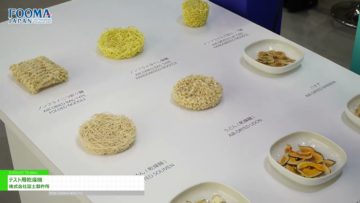
[FOOMA JAPAN 2024] Dryer for testing - FUJI MFG Co.
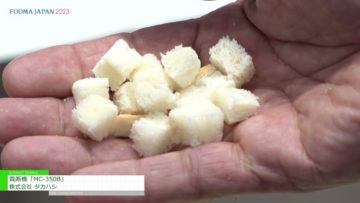
[FOOMA JAPAN 2023] Cutting machine "MC-350B" - Takahashi Co., Ltd.
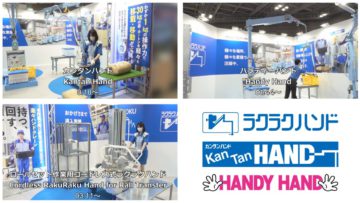
[FOOMA JAPAN 2022] Easy hand, handy hand, easy hand - Aikoku Alpha Corporation
年代別特集ページ
Fooma Japan 2026 (Japan)
FOOMA JAPAN 2025 - Food Processing Technology Expo (Japan)
FOOMA JAPAN 2024 (Japan)
Benefits of Exhibiting
FOOMA JAPAN enables exhibitors to directly present food machinery and manufacturing technologies to professionals responsible for manufacturing, production engineering, equipment, quality control, research and development at food manufacturers.
When food manufacturing equipment is evaluated for adoption, specifications such as processing capacity and dimensions are only part of the decision. Actual operation, finished product quality, ease of use and ease of cleaning also have a major impact. This makes exhibitions particularly effective for this sector because technologies can be explained while actual machinery is running.
The exhibition can be used not only to develop new customers but also to propose new products to existing customers, identify equipment replacement projects, approach overseas food manufacturers and develop joint-development partners.
Key Points for Exhibition Preparation
Clearly communicate which challenges the equipment can solve for food manufacturers, such as labor saving, higher processing capacity, improved yield, food safety or shorter cleaning times.
It is important to organize the information required by equipment and technical personnel for evaluation, including processing capacity, compatible foods, installation dimensions, required electricity, water supply and drainage, cleaning methods, maintenance and installation track record.
When conducting a live equipment demonstration, do more than simply operate the machine. Clearly explain differences from conventional processes in terms of work time, staffing and processing capacity to make the benefits of adoption easier to understand.
Estimated Exhibition Costs
Booth Space Fee
The basic booth-space fee varies according to booth size, participation format and other conditions.
Because large equipment is often exhibited at food machinery shows, planning must consider not only the required exhibition area but also access routes for搬入, machinery weight, electrical power, water supply and drainage, compressed air and other requirements.
Decoration and Booth Construction Costs
As a general guideline, booth construction may cost approximately JPY 300,000–800,000 for one booth, JPY 700,000–1,500,000 for two booths, and JPY 1,500,000 or more for four booths or larger.
If large machinery, floor reinforcement, three-phase power, water supply and drainage, compressed air, exhaust systems or demonstration spaces are required, construction costs may be higher than for a standard exhibition booth.
Staffing Costs
In addition to sales staff, having technical personnel who can operate the machinery and answer technical questions makes it easier to develop concrete discussions about equipment installation.
If proposals to international visitors are important, consider assigning sales and technical staff who can communicate in English or other languages, or arranging interpreters.
Transportation and Logistics Costs
Food machinery can be large and heavy, so in addition to transportation costs, expenses for forklifts, cranes,搬入 work, installation and removal should also be considered.
Please confirm exact fees with the exhibition organizer.
Booth Examples by Size
1-Booth Stand
Suitable for compact machinery, components, sensors, inspection equipment and IT services. Narrow the number of products shown and design the booth so visitors can immediately understand from the aisle which part of the production process the technology improves.
2-Booth Stand
This size makes it easier to separate live demonstrations from business meeting space. Showing the process from raw material input through processing and discharge makes it possible to explain processing capacity and operating methods more concretely.
4 Booths or More
Multiple food machines can be connected and displayed in a configuration similar to an actual production line. Robots, conveyance, inspection and packaging equipment can also be integrated and proposed as an automation solution for the entire factory.
When selecting a booth contractor, in addition to experience exhibiting food or industrial machinery, check construction photos and portfolios involving large machinery搬入, floor load capacity, electrical power, water supply and drainage, and compressed air.
Key Points for a Successful Exhibition Booth
Visitor Flow Design
Allow sufficient space around live equipment demonstrations so visitors can watch safely. The position of machine inlets, outlets and operating surfaces should also be considered when laying out equipment.
Visibility
Do not display only the machine name. Make benefits such as “Reduce a three-person process to one person,” “Increase processing capacity” or “Shorten cleaning time” understandable from the aisle.
Demonstration and Experience Design
Live machinery demonstrations are particularly important for food equipment. By using actual food products or samples to demonstrate input, processing, inspection and packaging, exhibitors can provide a concrete image of how the equipment will operate after installation.
Another effective method is to display demonstration start times in advance and conduct demonstrations at regular intervals to attract visitors.
Using Video at the Exhibition
When large equipment or entire production lines cannot be brought to the exhibition venue, showing a two- to three-minute product introduction video on a monitor or LED display inside the booth can be effective.
Video can supplement information that cannot be conveyed through machinery displayed at the booth alone, including equipment operating in an actual food factory, comparisons before and after installation, processing speed, cleaning processes and integration with robots.
If business discussions with international visitors are expected, English subtitles can communicate basic product information even when appropriate staff are unavailable.
Another approach is to film a company representative or technical specialist explaining the product at the exhibition and edit and publish a two- to three-minute video on the same day or the following day.
The completed video can be reused on the company website, YouTube, social media, sales emails, product pages and sales presentation materials.
By continuing to publish the video on WorldTradeShow.tv(インターネット展示会.tv), product information can also reach food manufacturers and equipment personnel in Japan and overseas who could not attend the exhibition.
Recording live machinery explanations and technical presentations as video turns information provided at the exhibition into a long-term sales and marketing asset rather than a one-time explanation.
If the booth contractor can also provide video production, equipment placement, lighting, monitors, LED displays, demonstration space and camera positions can be planned together from the booth-design stage.
Visitor Acquisition Measures for Better Exhibition Results
Email Marketing
Send exhibition information in advance to existing customers and prospective customers considering equipment installation, including the machinery to be displayed, demonstration details and booth location.
For customers with specific projects such as equipment replacement or new factory construction, setting meeting times in advance can improve efficiency.
Using Social Media
Share information about machinery, technologies and demonstrations in advance using videos and images. During the exhibition, short videos of equipment in operation can also be used to attract visitors already at the venue.
Invitations and Direct Mail
For important prospective customers such as production engineering personnel, equipment managers and factory managers at food manufacturers, invitations are more effective when accompanied by proposals tailored to the company’s production processes and challenges.
Using an Exhibition Landing Page
Create a dedicated exhibition Landing Page on the company website and include exhibited machinery, demonstration schedules, booth number, product videos, installation examples and a meeting reservation form.
By keeping videos and product materials available after the exhibition, inquiries can continue to be generated through search and sales activities.
Companies That Can Advise on Booth Construction and Operations
When exhibiting at FOOMA JAPAN, it is efficient to select a booth contractor that can advise not only on standard booth construction but also on搬入 and installation of large food machinery, electrical power, water supply and drainage, compressed air, floor load capacity, safety measures and demonstration space.
Live equipment demonstrations and product explanations by technical personnel can also be filmed at the exhibition and edited into videos of approximately two to three minutes on the same day or the following day for use in communications during the event.
By continuing to publish completed videos not only on the company website and social media but also on WorldTradeShow.tv(インターネット展示会.tv), product and technology information can continue to reach food manufacturers and equipment personnel in Japan and overseas even after the exhibition ends.
Please see the booth contractor pages below.